


What was once sisterhood now feels suffocating. The pressure to conform, fit in, and meet expectations leaves you feeling lost. True sisterhood should uplift, not drain. Walking away isn’t failure, it’s reclaiming your peace and authenticity.
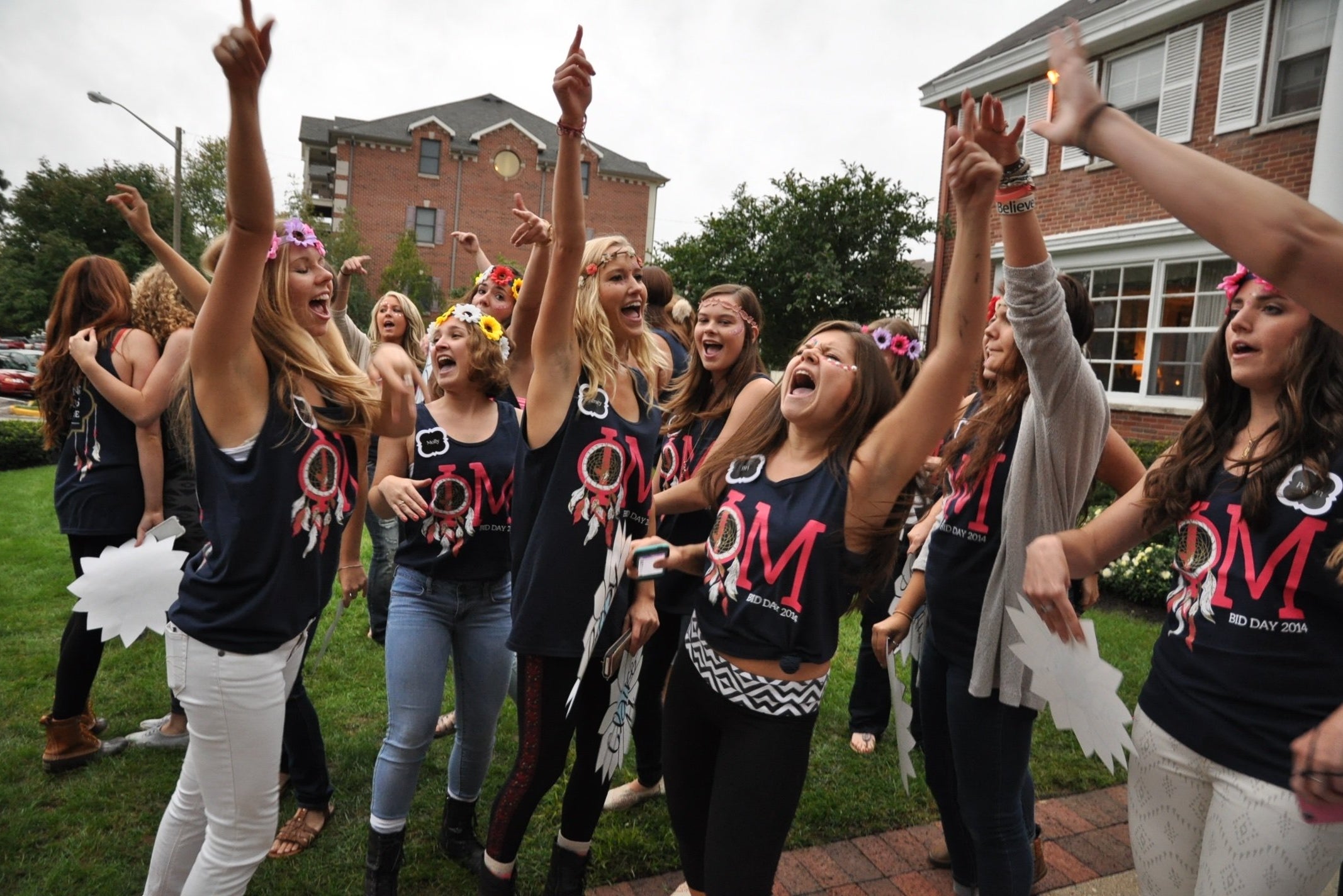
The fantasized pearly gates of the sorority house opened with an obnoxious mix of high-pitched cheers and music that Spotify would most likely classify as pink pilates princess pop. Bid day: a conclusion of the infamous recruitment period. A few days of freshmen, transfers, and students with a newfound interest in sorority life to run around the Hill in the latest trends and highlighter that can be seen from space. On the other hand, it’s three weeks of sleep-deprived sorority girls with their hands glued behind their backs and smiles glued onto their faces, having the same conversation with 40 girls a day. Under the guise of “trying to find a good fit” for their respective chapters, recruiters clutch onto any semblance of a similarity they can find in the girl sitting across from them, yelling over another 170 girls doing the exact same thing.
But it’s finally bid day and you’ve gotten through the worst of it! The girl you cried with on preference night jumps up and down at the sight of you running down the street and you think you’ve found your home for the rest of your college career. You’ve found your forever ‘sisterhood.’ But do you actually know what you’re getting yourself into?
The History of Sororities
The first sorority, Phi Beta Kappa, was founded in 1776 at the College of William and Mary. Initially, this was a men’s organization, but it eventually opened its doors to women, and soon after, the first purely female Greek-letter organization, Alpha Delta Pi, was founded in 1851 at Wesleyan College. The formation of these early sororities was largely a response to the exclusion of women from many educational and social spaces in the 19th century.
In this context, sororities were rooted in feminist goals: empowering women, creating safe spaces for education, and providing support networks in a world where women were still fighting for basic rights such as suffrage, property ownership, and access to education. They provided young women with a sense of camaraderie and solidarity in what was often a male-dominated world.
As the popularity of sororities grew, their relationship with the broader institution of higher education began to change. Universities, many of which were led by men, began to standardize and regulate sororities, and that’s where the influence of patriarchal structures started to take hold more visibly. Sororities, while originally designed to be empowering for women, found themselves needing to conform to the standards of the institutions they operated within.
In the late 19th and early 20th centuries, as universities grew more formalized, so did the Greek system. Sororities, like fraternities, began to structure themselves along gendered lines, with rules that governed behavior, appearance, and social interactions. The development of formal recruitment processes, fundraising goals, and a rigid system of hierarchy and exclusivity all mirrored broader patriarchal norms about control, power, and competition.
As sororities became more institutionalized, they also began to reflect and reinforce traditional gender roles. Women in sororities were often encouraged to adopt certain ideals of femininity, like being “proper,” “refined,” and “socially graceful,” which were aligned with what society deemed acceptable for women at the time. These gendered expectations became part of the socialization process in sororities, which emphasized the cultivation of beauty, charm, and social status rather than personal or intellectual empowerment.
The focus on social status, popularity, and appearances often overshadowed the original feminist principles of sisterhood and collective empowerment. In this way, the pressure to conform to patriarchal standards of beauty and behavior became more prevalent, creating an environment where women felt compelled to fit into a narrow definition of femininity.
The history of sororities is a complex reflection of the larger social and political structures of their time. What began as a feminist movement to support and empower women eventually became influenced by patriarchal ideals of hierarchy, exclusivity, and gender norms. While sororities have made strides in breaking free from these constraints and redefining their purpose, they still struggle to fully reconcile their feminist origins with the social expectations imposed upon them by broader patriarchal forces. The potential for change remains, as long as the women involved continue to push for a more inclusive and empowering vision of sisterhood.
The Standards in Question
As my For You page fills with over-saturated videos preaching sisterhood under the hashtag “rushtok,” we can’t help but wonder if our founders would have still created these organizations if they knew what they would turn into. Or, on the other hand, if sororities were founded now, would they still be based on the values of wholesome ideals such as friendship, service, honor, self-sacrifice, integrity, and belonging? We’ll probably never know, but we are starting to believe that the values of these institutions have drastically changed since their inception.
Nowadays, the “sorority girl” type is based on beauty standards designed by the male-gaze: long bleached blonde hair, a fake tan, and wearing the newest, most expensive clothing. On the surface, presidents and officers preach their inclusive values and how they “don’t care about appearances,” yet every Instagram page has the same feed aesthetic and pictures of the same type of girls. They say they don’t care about appearances yet all their members look the same. They say they don’t care about appearances yet if you don’t do your makeup and hair while wearing letters, you’re shamed. They say they don’t care about appearances and yet the first round of recruitment is solely based on a five minute video.
In practice, the constant promise of “just be yourself” truly means “be the person they want you to be.” The process that everyone will tell you to trust is actually heavily orchestrated. The reality is dirty rushing, bid promising, legacy bias, tier-talk, and other under-the-table dealings. The Panhellinic community prides itself on inclusion, but women still end up bringing down other women for the sake of their sororities. What happened to the feminist values our founder’s leaned on? Why do I, despite trying to avoid the commentary, still hold biases towards other women who are in other sororities simply because of stereotypes, rumors, and ingrained “us vs them” mentality? This narrative fosters internalized misogyny, continuing to play into the patriarchy, and what our founders fought so hard to detach from.
So what are our values now? We would probably say materialism, elitism, groupthink, performative activism, and exclusivity. Sue us for being pessimistic, but we’ve seen these values in action everyday now for the past three years. Our hope for a society of strong, supportive college women has been extinguished and we fear it will only get worse.
Conduct or Convict?
“We are ready for you.”
A message so simple, yet it strikes fear into a sister’s heart. As I walk down the hall to the conduct room, the walls seem to close in, the air thick with something ominous. It feels as if I am descending into the depths of hell itself. My hands shake as I push open the door, met by a row of women — no older or younger than me — who now hold my fate in their hands.
Conduct is treated as a mere shadow of a court of law — a reckoning. A judgment day. But if it were truly a court, evidence would be presented, hearsay would be inadmissible, and badgering the witness would be objected to. A real trial allows appeals on legal grounds. So why not in conduct?

I sit, heart pounding, as they string me up, nailing me to the cross, branding me with a scarlet letter I never deserved. They claim to be impartial, but we all see the injustices. We stay silent, fearing retaliation. You may leave that room alive, but you are marked forever in your chapter.
A defense? Absolutely not. It is you, the prosecutor, and the grim reaper, ready to drag you to your final resting place. Sorority conduct does not hold people accountable — it maims, it scars, it burns the innocent. Nepotism, corruption, power — this is what it thrives on. The moment you accepted that bid, your fate was sealed.

In the end, maybe it mirrors our justice system more than we’d like to admit — the guilty walk free while the innocent suffocate under the weight of the verdict. But, we do not bow to kings. And we sure as hell do not bow to a group of 20-year-old girls in Anthropology sweaters who could buy my textbooks twice over.
So when you join a chapter and feel the warmth of sisterhood, remember this: in a split second, it can all go dark.
The Cold Hard Truth
Sorority life continues to be meaningful for many members because it provides a strong sense of sisterhood and lifelong friendships built on deep connections and shared experiences. Beyond the social aspect, it offers valuable networking opportunities, with access to professional events and alumni who can help with career advancement, but this is not a given. Additionally, the chance to engage in philanthropy and community service gives members a sense of purpose, knowing they are contributing to causes that matter. Moreover, sororities offer a reliable support system, helping members through both academic and personal challenges. The values shared by many sororities, such as leadership, integrity, and service, align with the personal philosophies of their members, making the experience even more meaningful.

The reasons listed above are all great and should be everyone’s experience of their chapter, but majority of the time it is not. We are lucky enough to have found incredible friends that are our true sisters, but the institution itself has been incredibly suffocating and not what we signed up for. We signed up to be empowered, to be pushed, and to be loved by our fellow sisters. But, we cannot love a sorority that does not love us back. Life will go on and college will pass and we will still have our incredible friends, but being in sorority will not be what defines us and will not take credit for the beautiful friendships we crafted in spite of our chapter and the pressures associated with it. You may find your future bridesmaids, but at what costs? How much are you actually willing to sacrifice for sisterhood?