


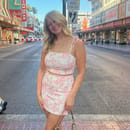
When I was a toddler, my mom was taking pictures of me by a bright window in our house. I smiled my missing-teeth smile, and when I tilted my head in the perfect angle, my mom noticed a cloudy white glare coming from one of my eyes when the light hit it correctly. She was, of course, immediately alarmed. I was taken to a doctor, and was eventually referred to an oncologist, which was where I was diagnosed with cancer. I had retinoblastoma, which is cancer of the eyes, most common in children under 3 years old. The next few months were nothing but a blur of doctors’ appointments, hospital stays, and nerve-wracking decisions. In 2004, they had no idea how chemotherapy would affect a toddler, so my parents made the decision to go through with an enucleation, which would mean having my eye completely removed and replaced with a prosthetic. And just like that, I was going to be okay. My left eye was replaced with a prosthetic one, and as far as I can remember, that is all I have ever known.
I knew I had a fake eye growing up, but it never really bothered me. I knew I was a cancer survivor, but I didn’t even know what that meant, let alone the levity that title holds. Having a prosthetic eye left me with a minor facial defect. I basically have a lazy eye, where my eyelid always looks about half closed, and my left eye doesn’t move when my right one does. When I was really young, like first grade, other kids rarely asked about my eyes, because when you’re in first grade, you don’t care about that kind of stuff. I didn’t really care either; I was mostly concerned with dancing and drawing and making friends. As I’m sure you can guess, around middle school was when my major insecurities about my eye started. People would make comments, saying I looked scary, ask me why I’m cross-eyed, or just make me feel less than because my eyes are different. This went on into high school, and this insecurity soon overtook my life. From high school into college, I got made fun of for my deformity. “One eye” was a common insult. “Are you even looking at me?” “You’re cross-eyed.” “What the hell is wrong with your eyes?” Every time I looked at someone, I thought about how they were probably noticing what was wrong with my eyes. Every time I met someone new, my thoughts were flooded with how ugly I must look and how they won’t like me because I look different. I stared at pictures of myself, hating the way I looked and hating that this happened to me.
This thought process of insecurity went on into college. But it was also around that time that I began meeting so many new people. I am from a very small town; my graduating class only had 50 people in it, and I knew the same small circle of people from the time I was a kid up until I left for college. When I began to meet more and more people of different looks, personalities, and lifestyles, my perspective began to shift. I spent so long thinking that because there was something different about my eyes, that meant I couldn’t be beautiful. I spent so long thinking that beauty was equal to perfection, but that couldn’t be farther from the truth. So many of my closest friends, who I think are the most beautiful people in the world, have things that they are insecure about, things that don’t make them any less beautiful. Why would that logic not apply to me? I have recently come to the conclusion that just because there is something different about me, doesn’t mean that I am any less beautiful. Having something different does not make someone ugly. In fact, there is so much beauty and wonder that comes with difference.
My prosthetic eye, no matter if it looks different, tells a story. I survived cancer. Should that not be celebrated? Why would I be so hard on myself over such a miraculous story? Yes, my eyes are different, and yes, maybe I do look cross-eyed sometimes. Can someone show me the rule book where it says that cross-eyed people cannot be beautiful? This logic can be applied to any insecurity. Being different, plus-sized, having a big nose or thin hair or acne, or being too short or too tall does not mean that someone isn’t beautiful. That’s what makes people different. If we all looked the same, if we were all the perfect version of ourselves, I truly believe that all beauty would be decimated.
My advice to someone struggling with insecurities would be to look around. Look at the other people you love in your life, and notice what is different about them. Does that difference make them any less beautiful? The answer is no. I completely understand that you think that if you were able to get rid of this one insecurity, then you would finally feel enough. But if you did get rid of that insecurity, you wouldn’t be you anymore. I hope I’m not sounding super corny here; I really am speaking from the heart. From my own experience, freedom from your insecurities is when you are able to embrace them and own them. They are not inherently bad, and under no circumstances do they mean you cannot be a beautiful person, inside and out.