


Content warning: This story is about gun violence.
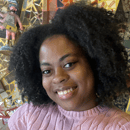
A little over a month after the tragic Dec. 13 school shooting that rattled campus, Brown University students headed back to classes on Jan. 21 for the spring semester. For many, it was an intense experience — attempting to return to normalcy amid feelings of unease, fear, and sadness. But for at least one student, sophomore Zoe Weissman, it wasn’t the first time navigating an experience like this.
Weissman was a sixth grader at Westglades Middle School in Parkland, Florida, when an individual opened gunfire at the neighboring Marjory Stoneman Douglas High School on Feb. 14, 2018. She was sitting outside with a few friends working on a school project when she heard the shots. “We were on the border between Douglas and Westglades,” Weissman tells Her Campus. “I’d say we were probably 1,000 feet away from the building where the shooting occurred.” Given their proximity to the school, she recalls hearing people trying to escape and seeing first responders. “We didn’t realize this until afterwards, but the shooting was already over by the time we got inside,” Weissman says.
That was the first time Weissman was expected to return to school after a shooting. It was a harrowing experience. “After I finished sixth grade, I ended up having to transfer schools because, mentally, I just couldn’t be there anymore,” she says. “That’s just how my PTSD manifested.”
In time, though, she found a way forward by advocating for gun violence reform, starting in 2019. “I think that was the point in my healing process where I felt like that would have been really productive and helpful for me,” she says. To this day, Weissman remains active in March For Our Lives, the gun violence prevention organization founded by Parkland shooting survivors.
Now as a two-time school shooting survivor (she was, in fact, in her on-campus dorm at the time of the Brown shooting), Weissman wants others to understand the dire need for comprehensive federal gun violence prevention. Her activism is geared toward preventing others from experiencing gun violence at all — let alone two instances of it.
“There’s been little to no action since I survived my first school shooting in 2018 to now [and I think that’s] indicative of the fact that this could easily happen to not only other survivors, but also to people who have never been through this before,” she says. “I think, unfortunately, people don’t realize the gravity of this issue until it impacts them, and I want to make sure it doesn’t have to get to that point.”
Now that the spring semester has begun, Weissman is hopeful to see some action within, and on behalf of, the Brown community in the wake of the December shooting. “I think the timing’s a little unique in the sense that it happened right before winter break, so we just automatically went into break a little early,” she says. “So I think a lot of the in-person actions are going to happen [now that we’re] back to campus, which I know a lot of people are anxious for.”
While there’s a long road of work and healing ahead, in the short term, Weissman says the return to campus has been a comforting start. “It’s been really nice to be back in the community with all my friends,” she says. “Brown is such a loving and warm environment so I think most of us are really happy to be here with each other.”