


Getting to Know the Gal
What self-respecting fashionista doesn’t know–or at least, hasn’t heard of–Nasty Gal? For years, it was one of the most coveted fashion labels for young, millennial women who weren’t afraid of kicking ass and looking good while doing so. The brand’s origin is a typical rags-to-riches story: Sophia Amoruso, a struggling drop-out in her 20s who at some point was living in her car, eventually goes on to become one of the most powerful and influential self-made female millionaires. Amoruso began her empire as an eBay seller, where she founded her online store, Nasty Gal Vintage, a shop dedicated to selling altered vintage store clothing at ridiculous marked-up prices. Eventually, Amoruso would go on to design her own clothing and founded her website, Nasty Gal, which became an overnight success.
Amoruso published her memoir Girlboss in 2014, a New York Times best-seller that logged her less than reputable life experiences. From dumpster diving and theft to a multi-million powerhouse, Amoruso’s adventures and storytelling often highlight her self-awareness, her narcissistic views of the world, and the zero f***s she gives about anyone and anything that dares stand in the way of her success. Netflix bought the rights to the book and created its own spinoff series, Girlboss, which is inspired “loosely” on Amoruso’s book. Charlize Theron and Kay Cannon, a writer best known for her work on 30 Rock and Pitch Perfect, went on to executive produce the series.

In an interview with Variety, Cannon said: “Society has this deeply rooted love of seeing women fail. I wanted to do this story because I wanted to show that you can fail and be OK, and to show women — especially young women — that it’s okay to suck as long as you pick yourself up and start again.”
In an interview on Chelsea, Theron said: “She [Amoruso] was dumpster diving, and she was sleeping in parks and stealing stuff. Not–I mean, maybe to be a bitch, but also just to survive. And I can relate to that, when you’re living in such necessity that you’re doing other things that people might think of as rude or not nice or something.”
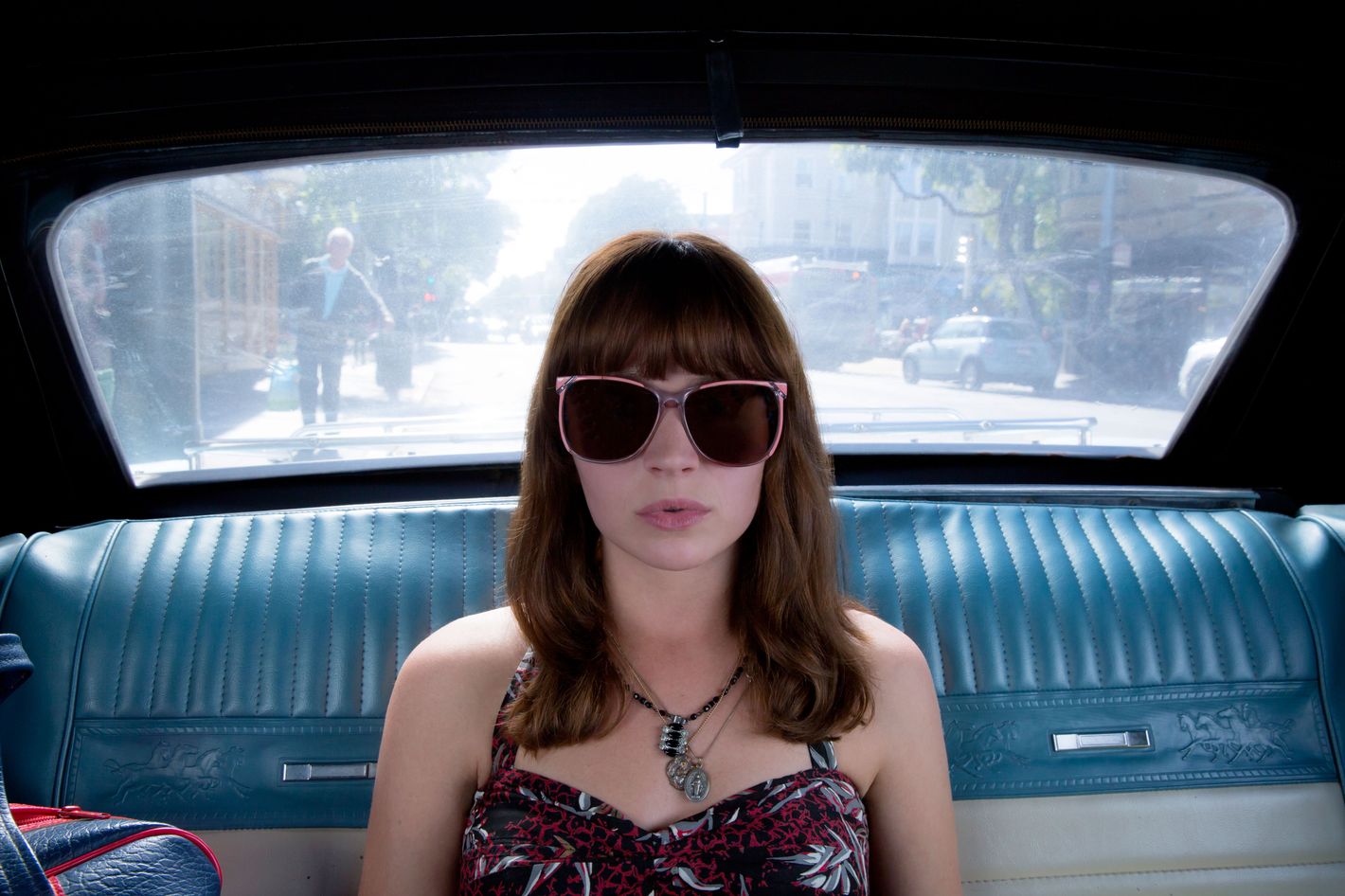
Introducing… the Anti-Hero
Britt Robertson (Tomorrowland) plays Sophia Marlowe, a self-centered, narcissistic rebel who is about to be evicted out of her crappy San Francisco apartment. It is evident that Sophia has no ambitions and no game plan other than scouting vintage stores for clothes and getting drunk with her best friend. Sophia has a rocky relationship with her estranged father, played by Dean Norris (Breaking Bad), and can’t seem to hold down a job due to her general apathy and lack of a basic sense of duty. Sophia is incredibly independent, or so she appears; so independent, in fact, that she is not afraid of hurting anyone’s feelings and seems to never consider that she should have even an inch of human decency and empathy towards others. Sophia is hip, young, and beautiful, and the world can kiss her ass.
The series follows Sophia in her journey from unemployed and arrogant, to successful and arrogant. The script is solid and the show quickly draws you in with a great soundtrack, relatable supporting cast, and beautiful shots that showcase the beauty of the grittiness of a big, trendy city like San Francisco. Each episode, which lasts roughly 30 minutes, brings about a new obstacle that Sophia must overcome, often using dubious and borderline unethical methods. Her emotional disconnection to everyone is paired off with her egocentric philosophy. However, for brief moments the plot will bring out fragments of vulnerability in Sophia: a tear, a tantrum, a downright meltdown of anger and grief and abandonment. It’s easy to hate Sophia Marlowe and the show, and to be honest, most critics do. In fact, even I had my moments of dislike and I wished I could just stick my head into the screen and yell, “Get a grip and look at yourself, woman!” Still, I binged-watched the series in less than one day, so there is something there. A smile, a dance, a song, a kick-ass outfit: the story, with its flawed anti-hero and its grungy mid-2000s MySpace allure, draws you in.
“If you watch Girlboss and love it, I want you to get help.” –Julia Raeside, The Guardian
The Verdict is In… Bring on the Nasty
If you’re anything like Julia Raeside (and dozen others who’ve absolutely demolished the series in their reviews), you’ll love to hate Girlboss. And yet, to hate and critique this series is too lazy of an act. To put it bluntly, Girlboss depicts the darker side of a young girl who’s incredibly clueless about what it’s like to be an adult and, hell, a decent human being.
Still, I encourage anyone and everyone to give the show a try: it’s witty, entertaining, and its writing and directing are spot on. Yes, its character is highly unlikeable but aren’t most people IRL? If you’re searching for a Feminist icon for millennials everywhere, this is not it. But, if you’re searching for a fun show with antics, an extremely flawed protagonist, and shenanigans, I think you will enjoy Girlboss.
The lesson of the show? “You don’t need to be a nice and agreeable woman to be successful. In fact, you can be a downright bitch and still #getpaid.”