


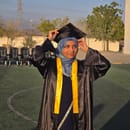
I grew up in a city that was not entirely mine. Meaning that I could not fluently speak the language of its natives, I did not have citizenship rights to that country, and therefore I could never see it as my own place, my own culture, my own people. And where I technically belonged was my Indian hometown, which I visited for a month every year. Even then, I was sandwiched between two places that I called home, never feeling that complete sense of belonging in either, which is, unfortunately, the standard gulf-kid experience. But there is beauty, community, joy, and nostalgia to this experience as well, which I will explore in this article.
Now, let me introduce Nizwa, the city I am going to talk about today. Nizwa is an ancient city in the Ad Dakhiliyah region of Oman, a country in the Middle East. Nizwa turned me into a countryside person, because it is not a metropolis in any sense. We give off only cute, historic, small town vibes. There are forts, pretty mountains, ruins of old architecture, fields of corn and date palms, water canals called “Falaj” that run through the fields for irrigation. There are also two little malls, lots of restaurants (especially Turkish), cafes, gift shops, parks, markets (called Souqs) and water ravines called Wadis. It is the cultural capital of the country, and if you go to any famous mountain or to the local souq, you can always spot a bunch of tourists. Growing up amidst all this, I was always so proud of being from Nizwa, despite it being remote and more of a small town when compared to big cities like Muscat. I loved the peace and quiet so ardently, and I still do.
When I was six years old, my mom and my little sister, who was not even two years old then, and I, moved to Oman to be with my dad, who got there a year earlier. I remember being wowed by the lights at night on the way to our apartment; streetlights everywhere, and lights of all colours hung on shops and signboards. And Nizwa welcomed us like family. According to me, the Omanis are the most hospitable people on earth, but I am of course biased. As a kid walking in the mall with my family, Omanis would randomly come up, put chocolates in your cart, then walk away. They will greet you even if they don’t know you. They will stop the second they see a broken down car on the roadside. As I built my identity in that city, its ideals of hospitality, empathy, and unwavering kindness also seeped into me.
In addition to this, being in any corner of the Middle East comes with a huge community of Indians, specifically Malayalis. So, in some sense, I did have a replica of my Malabari hometown there. I would speak mostly in Malayalam in school and would continuously get scolded for it. I was always actively involved in the diaspora, as was my family, and it is from there that I got lessons on community-building, leadership, and the art of bringing people together. Furthermore, the simplistic yet breathtaking style of buildings, the mellow and minimal style of homes, the never-ending arch of mountains, the bougainvillea and dry shrubs that you see everywhere, and the seasonal sights of overflowing springs and ravines- all of it has designed my idea of beauty, of nature, and of architecture, as they were all elements of home to me.
So, growing up in this city has undoubtedly and generously contributed to who I am as a person today. From the markets to the mountain peaks to the halwa, mishkak, and shawarma, it is also a little melting pot of expatriate and Omani cultures. Oman has also had historical ties with Zanzibar and Tanzania, making this pot even more vibrant. Adding to it is the Indian and South Asian connection of trade, assimilation, and immigration, which has lasted for centuries. Living in Nizwa, you naturally develop strong feelings of cultural and religious tolerance, because even within the Indian diaspora, there’s so much diversity that I wouldn’t have gotten to experience in Kerala. Thus, this small, touristy city has moulded me in countless ways and influenced my perspective on the world as a whole. All my ideals on empathy, my interest in social work, my strong sense of justice and equity, and even my idea of what is aesthetic, come from this city and its people. Even though I am not a citizen, Nizwa is always spelled “Home.”