



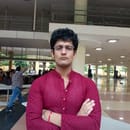
“I am driven by visuals.” Ansh Yadav opens up about identity, risk, and storytelling in a world obsessed with safe choices.
There is something quietly electric about people who choose the uncertain path and then walk it like it was always meant for them. Ansh Yadav is one of those people. In a world that worships stability, fixed salaries, and predictable outcomes, Ansh chose something far less comfortable and far more honest. He chose visuals. He chose storytelling. He chose to build a life around what he feels rather than what is expected.
Interviewed by Vaibhav Chaudhary at HCMUJ, this conversation is not just about photography. It is about identity, risk, and the kind of stubborn belief that does not wait for permission. From picking up a camera at the age of 12 to walking away from conventional education, Ansh’s journey reads like a quiet rebellion against the idea that success must look one specific way. And yet, nothing about it feels forced. It feels earned.
This is not a glossy, over-polished narrative of overnight success. It is raw, occasionally chaotic, deeply introspective, and unapologetically real. It talks about doubt, about not having a plan B, about being misunderstood, and about still choosing to move forward. It talks about creativity not as an aesthetic, but as a way of thinking, a way of existing. At its core, this interview is about one simple truth: when you are driven by visuals, you are not just capturing the world. You are translating it.
When passion stops being a hobby.
There is always a moment, subtle but significant, when something you casually enjoy begins to define you. For Ansh Yadav, that shift did not arrive with a grand announcement or a cinematic turning point. It unfolded quietly, during his school years, in moments that most people would overlook.
He says he was “just giving it a shot” at first. No pressure, no expectations. Just curiosity meeting a camera. But then something changed. It was not the act of taking photos itself, but the reactions that followed. When he would show the images to teachers, their responses were immediate and visceral. “This is beautiful. This is so nice.” That validation did not inflate his ego, but it sparked something far more important. It made him pause and think, maybe I am actually good at this.
And that thought, fragile as it was, became the foundation.
Interestingly, Ansh does not glorify external validation. He is quick to point out that at a certain stage, creators deliberately make things people might not like, just to push boundaries. But in the beginning, those reactions matter. They act as proof of concept. They tell you that what you see, what you feel, can resonate with others.
What stands out here is his awareness of how perception works. He speaks about how society often labels things as “creative” only when they are validated by authority. A bizarre fashion shoot might be mocked online, but if it appears on a magazine cover, it is suddenly art. This understanding shaped his early mindset. He realised that creativity is not about fitting into an existing mould. It is about trusting your own lens, even when others do not understand it yet.
That is when photography stopped being a hobby. Not when he got better equipment. Not when he started earning. But when he recognised that this was not just something he did. It was something he was.
Support, resistance, and choosing your own path.
If there is one myth that needs to be retired immediately, it is the idea that passion is always supported, celebrated, and encouraged from the beginning. Ansh’s experience tells a very different story.
When asked about support during his early days, his answer is blunt. “No one was.” It was the classic scenario of disbelief, scepticism, and the ever-familiar expectation to follow a conventional path. Engineering, medicine, law. The holy trinity of “safe” careers.
But amidst that noise, there was one constant. His mother.
He describes her not just as supportive, but as someone who truly listened. And that distinction matters. Support is not always about agreement. It is about understanding. It is about creating a space where someone can be heard, whether they are right or wrong. That emotional safety became the backbone of his decision-making.
In a bold move that would make most people pause, Ansh decided to step away from the traditional academic route altogether. His mother, recognising his potential, questioned the need for a conventional degree too. The next day, he walked into school and essentially said he would not be continuing.
It sounds dramatic, and it is. But it is also deeply intentional.
He also touches on the broader societal context. In a country where deviation from the norm is often met with doubt, choosing a creative career at a young age feels almost rebellious. Not because it is wrong, but because it is unfamiliar. People are not always sceptical out of malice. Sometimes, they simply do not have a reference point.
Ansh acknowledges this without resentment. He understands the system, but he refuses to be defined by it.
And perhaps that is the most powerful takeaway here. Choosing your own path is not about rejecting everything else. It is about recognising what aligns with you and committing to it, even when the road looks uncertain.
No plan B, only commitment.
The idea of having a plan B is often sold as wisdom. A safety net. A backup that ensures you do not fall too hard. But for Ansh Yadav, that logic simply does not work.
His reasoning is brutally honest. If he had a plan B, he would be split. Fifty percent here, fifty percent there. And for him, that kind of divided attention is not just ineffective, it is impossible.
He describes himself as someone who needs to commit fully. Creative work, especially, demands that level of immersion. It is not something you can approach half-heartedly. It requires time, energy, and a willingness to go all in, even when there is no guarantee of success.
He recalls a talk by an IAS officer who advocated for strong backup plans. It made sense, logically. But logic does not always align with how individuals are wired. For Ansh, the idea of a fallback felt like a distraction rather than a safety net.
So he chose differently. No plan B. No looking back.
And that decision shaped everything that followed. He poured everything into his work. Blood, sweat, tears. Not as a dramatic phrase, but as a lived reality. He focused on what lay ahead rather than what he was leaving behind.
There is also an underlying philosophy here that feels quietly profound. When you are constantly looking back, you miss what is in front of you. And in a field that thrives on observation, on noticing the details others overlook, that kind of distraction can cost you more than just opportunities.
Ansh’s approach is not for everyone. It is intense. It demands a level of self-belief that can feel almost reckless. But for those who resonate with it, it offers something incredibly rare. Clarity.
The reality behind creative careers.
Creative careers are often romanticised to the point of distortion. From the outside, they look effortless, aesthetic, and endlessly exciting. But Ansh is quick to dismantle that illusion.
One of the most interesting misconceptions he addresses is the idea of appearance. The so-called “creative look.” Dyed hair, piercings, tattoos, a certain aesthetic that people associate with artistic professions. He points out how many aspiring creatives feel pressured to adopt this image, believing it is somehow linked to their work.
But in reality, it is not about looking creative. It is about being creative.
He explains that personal style is simply another form of expression. It is not a requirement. It is not a checklist. Some of the most talented people he has encountered do not fit that stereotype at all. They show up, do their work, and leave. Sometimes wearing the same outfit for days because they are so deeply focused.
That image is both humorous and revealing.
It highlights a crucial truth. Creativity is not performative. It is not about how you present yourself to the world, but how you think, how you solve problems, how you see things differently.
He also emphasises the importance of authenticity. Trying to imitate what you think a creative person should look like is, ironically, the least creative thing you can do. The goal is not to fit into a mould. It is to build your own.
And then there is the grind. The part no one glamorises. The cold messages, the rejections, the slow growth. The moments where you question everything. He does not sugar-coat it. In fact, he actively warns against the temptation of easier alternatives.
Earning less but building something of your own, he says, carries a sense of ownership that cannot be replicated. It is not just about money. It is about meaning.
Storytelling, connection, and being driven by visuals.
If there is one thread that ties everything together, it is storytelling.
Ansh speaks about how a photograph is not just about composition or technical perfection. Sometimes, those rules need to be broken entirely. What matters is the emotion. The story. The feeling that lingers after the image is seen.
He gives the example of portrait and street photography, where the viewer is not analysing framing or lighting. They are responding to the emotion captured within the frame. That connection, that immediate reaction, is what makes an image powerful.
At the same time, he acknowledges that there are moments where technique and emotion intersect. A scenic shoot, for instance, might require both strong composition and a clear emotional narrative. The balance shifts depending on the context.
What stands out is his willingness to let go of rules. He talks about how sometimes, everything you have learned needs to be set aside to capture something real. Creativity, in that sense, becomes less about following guidelines and more about trusting instinct.
He also highlights the importance of human connection. Whether it is networking at events, engaging with like-minded people, or simply having conversations, the creative industry thrives on relationships. Not superficial ones, but genuine interactions that open doors and create opportunities.
And then comes the line that defines him.
“I am driven by visuals.”
It is not just a statement. It is a philosophy. It explains why he would wake up at odd hours, travel spontaneously, or chase an idea without hesitation. It explains the urgency, the energy, the refusal to stay still.
For him, visuals are not just work. They are fuel.
What makes this conversation linger is not just what Ansh Yadav says, but how unapologetically he says it. There is no attempt to soften the edges, to make the journey sound easier than it is. And that honesty is refreshing.
In a world that constantly pushes for safe choices, Ansh’s story feels like a reminder that there is another way. A messier, riskier, more unpredictable way, but one that is deeply personal. One that allows you to build something that actually feels like yours.
He does not position himself as someone who has figured everything out. In fact, there is a quiet humility in the way he talks about growth, about still learning, still evolving. But there is also an undeniable clarity about what drives him.
Visuals. Not trends. Not validation. Not expectations. Just the urge to create, to capture, to translate what he sees into something others can feel. And maybe that is the takeaway. You do not need to have everything planned. You do not need universal support. You do not even need certainty.
Sometimes, all you need is that one thing that pulls you forward, again and again, even when it does not make sense to anyone else.
For Ansh Yadav, that pull is clear.He is, and always will be, driven by visuals.