


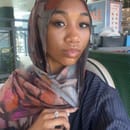
Growing up 52nd Street Islamic stores, slip-on one-piece hijabs with jewels, and getting henna with my Grand-mom at pop-up shops are symbols I cherished as a young Muslim girl from Philadelphia. I took pride in attending Islamic events around the Holy month of Ramadan and making friends in school who shared the same values as me, even if I didn’t have the knowledge of everything. Now, this new generation is slowly losing the art of community and struggling through violent stereotypes that are shaped around being a Muslim from Philadelphia.
The phrase “Philly Muslims” subjectively targets African American Muslims from Philadelphia. The people of Philadelphia have a culture of their own, so, subjectively there are things that some Muslims in the city do differently. While the actions do not represent Islam as a whole, I feel that when you commit an action that is inherently wrong in Islam while displaying the religion, it’s easy for nonbelievers to criticize and generalize everyone has a whole.
I believe that Muslims are held to a higher standard by the public simply because of the way we dress, and the assumptions made from others. People who know of only the top layer of Islam saw the phrase whom I believe knew it was wrong, and dragged the actions as a free-for-all to display shame and undercover racism towards the marginalized group. As the phrase became more popular and used by people outside of Philadelphia, they started to comment on everything they saw Muslims do “wrong” because of the strict submissive stereotypes they think they know Muslims to strictly live by, which is not the case to an extent.
As the causality of using the phrase “Philly Muslims” grows, I feel that it becomes more of something used as a mockery and stereotype than an admiration. While Islam is a widespread religion that has a huge community of believers, the phrase disrespectfully groups together believers who do not partake in the actions that correspond with the phrase and, ultimately, hurt people in the end. The social media label “Philly Muslims” may seem harmless or trendy, but it shapes how Muslim women in this city are seen, treated, and understood.
What might start as an inside joke quickly turns into a fixed image of what Muslim women from Philadelphia are supposed to act like, dress like, or believe. When thousands of people engage with that image, it begins to feel real, even if it was never meant to define anyone in the first place.
The danger isn’t just the humor; it’s repetition. When a stereotype is repeated often enough, it shifts from entertainment to expectation. Online portrayals may seem harmless, but they influence how classmates, professors, and strangers interpret us offline. Social media doesn’t just reflect identity; it shapes it.
The phrase “Philly Muslims” floats around social media like it’s an aesthetic. Sometimes it’s used as a joke, sometimes as a compliment. Even compliments can feel layered — “You’re not what I expected” is meant to sound flattering, but it reveals the stereotype underneath. But in real life, that label sticks in ways people don’t realize. It turns complex, individual women into a single personality type. According to the internet, we’re either overly aggressive or overly sheltered. Too religious or not religious enough. There’s rarely space for nuance.
In a city as culturally loud and expressive as Philadelphia, I sometimes feel like I’m balancing two identities people assume can’t coexist: Muslim and Philly. But I am both. I grew up with the same slang, the same neighborhoods, and the same school pride. My faith doesn’t cancel out my city, and my city doesn’t weaken my faith.
What social media misses is the quiet exhaustion of constantly negotiating how you’re perceived. Do I soften my voice so I’m not seen as “intense”? Do I speak up so I’m not seen as submissive? Do I correct every misconception, or let some slide to protect my energy? Breaking stereotypes isn’t just about proving people wrong — it’s about protecting your sense of self in spaces that try to simplify you.
The term “Philly Muslims” might trend for laughs or relatability, but for me, it represents something deeper: the constant tension between how I’m labeled and who I actually am.
If anything, the term “Philly Muslims” shows how urgently nuance is needed. We are not a trend, joke, or a personality type. We are individuals navigating faith, culture, and city life on our own terms. And the most powerful way to challenge a stereotype is simply to live beyond it.
Breaking stereotypes, for me, isn’t about proving I’m “different” from the label. It’s about refusing to shrink myself to fit inside it. I can be outspoken and faithful, ambitious and modest, deeply rooted in Philadelphia and deeply committed to my religion. Those identities are not contradictions — they are layers.