


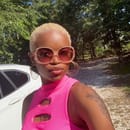
A two and a half hour flight away from São Paulo sits a coastal city that is home to the largest Black population outside of Africa—Salvador de Bahia, Brasil. This summer, I had the opportunity to participate in a three-week study abroad program where I would learn Portuguese, stay with a host mother, and immerse myself in the Afro-Brazilian culture. When I arrived in Salvador, after a full day of travel, I felt something wash over me. Was it jet lag? Hunger? Yes, but it was also a wave of familiarity. Despite having never been to Brazil, or South America for that matter, I felt an immediate connection to Salvador.
During my stay, I lived with a host mom and walked to class every day. It didn’t take long to notice that there are more Black than White people. In the grocery stores, while walking to work or going to church, I saw faces that looked like mine and my family’s. I often had people speak to me in Portuguese because, at first glance, I didn’t look like a tourist, and that was something I only experienced when visiting Barbados or Belize.
In our daily lectures we talked about the Black community in Salvador and the depth of its African culture. We learned about African spirituality, customs, food, as well as politics, racism, and colorism in the society. Unfortunately, Black women face a lot of the same stereotypes and struggles in Salvador as we do across the United States. Light-skin women are deemed more desirable unless they have African features like a wider nose or kinky hair. Dark-skin women can be desirable if they have straight hair and more European features. It was astonishing to hear that in a place where African heritage is so fiercely protected and preserved, the women who help maintain and uplift the culture are often disrespected the more African they appear. As a Black woman who grew up seeing my grandmothers wear wigs, my cousins having long straight hair, and my mother, who is lighter than me, wear her straight for much of my early life, it brought back so many emotions from when I was a little girl. Even as an adult, I still struggle from time to time, but in my own experience in Salvador, I was often reminded of how beautiful my skin and features are despite societal opinions.
The most significant experience for me was the reading of the shells. Before my trip, I had researched Orixás (Orishas) and Yoruba spirituality, as well as the significance of each Orixá. Yemanjá, pictured below, is the mother of the Orixás and represents fertility and the sea. While discussing religion and things seen in the Candomble temples, I was able to connect it with aspects of the Baptist church I grew up in with my grandmother. Learning about the Orixás who serve as my “guardian angel” was a special moment that deepened my connection to Salvador.

My time in Brasil was far too short. The food and the people made me feel at home, deepening my own connection with my Caribbean and southern roots. Salvador holds a special place in my heart, and every Black adult should visit at some time in their life. To Salvador, with love!