


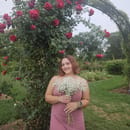
Last month, I got the opportunity to pretend I was a professional national journalist, traversing the streets of Washington D.C., sprinting to Capitol Hill to cover the latest congressional news.
I’m kidding. I was actually traversing from my humble Airbnb to the fancy hotel I failed to get a room in, wearing my dress pants and blazer, my mom’s old Kate Spade tote bag on my shoulder and some slightly too-big loafers on my feet. I was a little lost, a little overwhelmed, but I was on my way to Media Fest, the largest student and professional journalism conference in the nation.
There were hundreds of panels from professionals and students alike about newspapers, yearbooks, social media, resumes, politics, and more. Hundreds of incredible — alas, overlapping — panels in four days should be criminal, because I spent so long trying to figure out what to go to. Just for you, I have done the grueling task of picking my top three panels from Media Fest.

Talking to Strangers: Interview tips
Dean Nelson, a professor of journalism at Point Loma Nazarene University in San Diego, California spoke on Oct. 16 about how to get even the haters to give a good interview. It’s not as daunting of a task as one may think, actually.
You just need to make them feel seen.
Nelson says you should say things like “I need your unique perspective,” and “your stories matter.” Throw yourself at their mercy by simply saying “I need your help.”
Or, put your foot down: “I’m doing the story, but it’ll be better if you’re in it.”
People want to tell their stories, Nelson said, but they just need to be sure that you’re the right person to tell it to. The best way to do this is to be yourself! Nelson said that if you’re shy and awkward, embrace it! You don’t have to be a bright, bubbly, extroverted person to be a good journalist. People can tell if you’re putting on a front.
Nelson said that preparation is also key to interviews. You should know most, if not all, of the answers to your questions before you ask them. You just want them to say the answer for some quotes. You should prepare just a few questions to get you started, but don’t be strict. See where the wind takes you.
Breaking Big stories
Fittingly, Pierre Thomas, chief justice correspondent of ABC News, had to Zoom-call into this session, as he was breaking big stories about former National Security Advisor John Bolton’s indictment at the Capitol.
While I missed the chance at seeing the man I watched on TV every night with my parents in person, just hearing him speak was enough for me, even if it was through a glitchy screen.
Thomas said that our jobs as journalists is to adjust to our surroundings, to the current administration. Our only agenda is to tell true stories about what the government is doing. This requires a lot of intensity and focus, he said. It also requires making people, politicians, particularly, mad.
A side note: if you’re working on dealing with rejection, maybe go into journalism. The field is just rejection therapy, all day, every day. Also, it’s great for learning how to deal with making people mad. That’s about 90% of your job, I’d say.
Thomas said that journalism is a public service. You work for the people. You gather information for the people. You piss off some politicians for the people. Journalism is an important field. Thomas said you should recognize that and appreciate the hard work you’re doing.
Thomas acknowledged that it’s tough to have a life outside of journalism once you’re in the thick of it, but that’s the name of the game. He talked about the maybe three hours of sleep he had gotten the night before between doing World News Tonight and Good Morning America. But it’s honest work.
We’ve read over 10,000 resumes

What would a student journalism conference be without some job-hunting panels?
The room was jam-packed. Every seat was taken. People were standing against the back walls or sitting on the floor to hear Carla Correa, deputy director of career programs at the New York Times and Bill Ruthhart, a writing coach and editor for the Times, give a crash course on what the best resumes and cover letters look like.
And no, they aren’t lying. They said they really did comb through 10,000 resumes and cover letters. None of that AI-bot stuff here.
They gave out rapid-fire tips for good resumes, including having clear and precise bullet points, making sure everything is relevant to the job for which you are applying, letting your resume show your growth, and keeping it one page!
Cover letters, they said, should also be one page, and should showcase why you are qualified for the position and why you are passionate about journalism.
An example cover letter told a story of the reporter knocking on the door, preparing herself to speak to whoever opened it. This is what they want! It helps them picture you doing the job. Have short, punchy sentences. Get to the point. One page!
Some cardinal sins of cover letters: starting out by saying what job you’re applying to. Well, duh! Of course, they know that (I am not shaming you if you’ve done it, because I’ve definitely done it too…).
Don’t just reiterate your resume either. Add something new. Showcase your personality. Most importantly, show that you can write.
I attended quite a few other panels about a variety of different things: covering courts, making good yearbooks, gaining public trust, and running student radio (shoutout WHUS). I also, of course, wandered the streets of D.C., making a quick pit stop to be a political science nerd at the Capitol.

I got a lot of good advice and ideas from the panels. I learned that I needed to revamp my resume, embrace my awkwardness in interviews, and accept that I’ll probably just keep making people mad throughout my career.
I learned that I’m a city girl at heart and that I absolutely want to make a career in political journalism.
And maybe, most importantly, I finally took a new photo for my LinkedIn profile.
In all seriousness, I am incredibly grateful to have attended this conference. I met and heard from so many wonderful people from across the country. I got to read magazines and newspapers and yearbooks from universities all over. If I could, I would do Media Fest all over again. If you’re a journalism student, I highly recommend going when it comes back around!