


Intellect, bipedalism, soul, and language capacity are some of the attributes that make a human. Part of being human is connection, which is pivotal to our well-being.
Researchers have long provided empirical evidence of women scoring higher on measures of emotional intelligence. While scientists conclude women are biologically wired to connect and support themselves and those around them, society stereotypes women as overly emotional and compassionate.
However, connection can’t come without a shared quality or sentiment between two or more people. A sisterhood doesn’t form without a bond or tether stringing them together.
Sisterhood can be characterized by muffled giggles in the corner of a quiet room, or compliments commented upon mere seconds after a friend posts on Instagram. Sisterhood can also involve standing united at a rally for core beliefs or even being part of BookTok on TikTok.
In a digitized world, finding individuals with shared values has become easier than ever. We now have opportunities to connect with women worldwide or maybe bond with a woman over Twitter, only to find out she lives in a nearby town (true story).
In a 2017 study published in the Social Cognitive and Affective Neuroscience journal, researchers said 85% of people worldwide consider themselves religious. While this number has definitely changed since 2017, and the term “religious” has become subjective, there is still no doubt religion influences life and people.
Wars, land grabs, universities, and governmental systems — almost everything has origins related to religion. Faith undoubtedly influences and determines a nation’s fate and laws. To ignore religion entirely is to ignore what has brought society to the present.
We consume some form of religious debate on the news almost every day. Religion in the media is sometimes all that’s on our phone screens.
As many of us know, the media loves to report on the “bad.” Tension is often expected for a story to be published. As a result, publications and news outlets show communities fighting, and the gap that once existed between differing groups grows larger.
For every picture of a protest in which two religions stand on opposite sides holding posters with red ink, there are photos of friendships, relationships, and sisterhoods of interfaith individuals (again, true story).
The media does not show the collaboration and love that exists between interfaith individuals.
The Sisterhood of Salaam Shalom — an organization of Muslim and Jewish women for peace with a chapter in Toronto — vows to “ amplify minority women’s voices.”
Founded in 2010, the sisterhood has held events, conferences, film screenings and other opportunities to form bonds between Muslim and Jewish sisters. The basis of their organization is to embrace interfaith sisterhood and bridge understanding through shared values.
In a music project by the organization, the Sisterhood of Salaam Shalom brought together African-American, Mormon, Jewish, and Muslim women to perform at their annual conference.
Their work extends beyond their differences. Yet, connection requires choice. It requires individuals to want to connect.
Hebah Farrag, a Muslim woman, was in awe of “the beauty and variety of devotional dress” during her work with Catholic sisters. The similarities and spectrum of religious garments in Catholicism cross with that of Muslim women.
“There seems to me to be a natural partnership between these two groups of women, Muslim women and Catholic sisters, a space to work together in an interfaith capacity to aid in mutual understanding,” said Farrag.
She said Catholic and Muslim sisters have a shared goal of serving the poor and helping those in need while battling inaccurate assumptions about their faith.
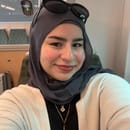
In my most formative years, as a Muslim Arab woman, I found comfort and solace in non-Muslim women who were drawn to discussions of faith and discovery. My friends are Muslim, Hindu, Christian, Jewish, Buddhist, Sikh, and Atheist.
Sisterhood extends beyond appearance and religious identity. We don’t have to be the same on paper to be connected.
Attending Catholic student associations and immersing myself in other faiths helped me become more confident in my own.
How women worship a god may be vastly different, but it’s the act of worship that connects us. It’s the fact that we raise our hands and ground ourselves as we pray in dimly lit rooms that brings us together. It’s the similar religious garments and devotion that spark conversation.
Sometimes, our only contrast is the religious text that lies on our nightstand. Interfaith sisterhood is easy to form, but it requires the openness to look for the similarities rather than focusing on the differences.