



If you’re on TikTok, Instagram Reels, or YouTube Shorts, it’s likely that a color analysis video has popped up on your feed; and if not, a lot of people have still heard of it. It’s something that often garners some very strong opinions. Some people swear by it while some hate it with a passion. But what even is it? Why do some people swear by it? This week, I’m going to go over what color analysis is and bust some myths, and next week, I’ll walk you through how to find your color season.
A Brief History of Color Analysis:
While ideas about people’s “best colors” and the concepts of Spring, Summer, Autumn, and Winter go as far back as the 1960s, the true origins of what we look at as seasonal color analysis today come from Carole Jackson in her 1980 book Color Me Beautiful, as well as Suzanne Caygill’s 1980 book Color: The Essence of You, which introduced sub-seasons under the Winter, Spring, Summer, and Autumn umbrellas, though not the ones that we see today.
It became a trend in the 1980s to get one’s colors analyzed, but it eventually went out of fashion. But in the 2020s, it made a resurgence, especially in the United States. I can’t find the origins of the sub-seasons officially becoming warm vs. cool, soft vs. bright, or deep vs. light, but that is what is most commonly used today in the West—the popular system in South Korea is different.
What Color Analysis Is:
Most people have an idea of some of their “best” colors and colors that they don’t feel as confident in. At its core, color analysis is finding which of the twelve seasons you fit into the most, and that helps you find your best colors and colors that don’t work for you as well. This is based on the color of your skin, hair, and eyes, particularly the undertones in your skin rather than your overtones. Many people have warm overtones but cool undertones, so be careful assuming that you’re warm immediately based on your overtones. Next week, I’ll write about this more in-depth, but a good way to start finding your undertones is to see if you thrive more in gold (warm) or silver (cool).
The four seasons more broadly are as follows:
- Winters: cool, dark, and bright
- Springs: warm, light, and bright
- Summers: cool, light, and soft
- Autumns: warm, dark, and soft
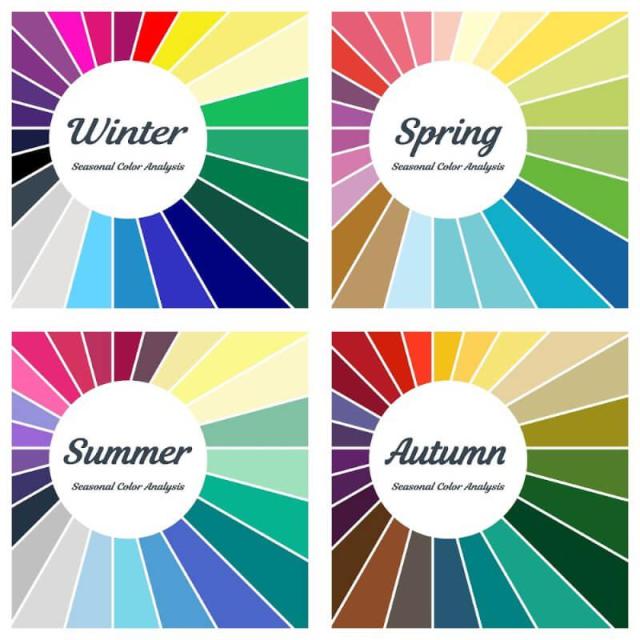
It is important to note that not all people with the light feature have light skin, and not all people with the dark feature have dark skin. I’ll go into this more later, but this is about harmonious colors rather than what you may see immediately. I am saying this now because it is one of the most common “red flags” that people see, and also a common misconception among people who do like color analysis. I will be describing lightness and darkness as features, but that is because it is the commonly used language, not necessarily the features of the person themself.
As sub-seasons are still parts of their seasonal umbrella, a Soft Autumn will still be slightly dark, a Light Summer will still be slightly soft, and so on. Within these seasons, there are twelve sub-seasons, each with one most prominent feature:
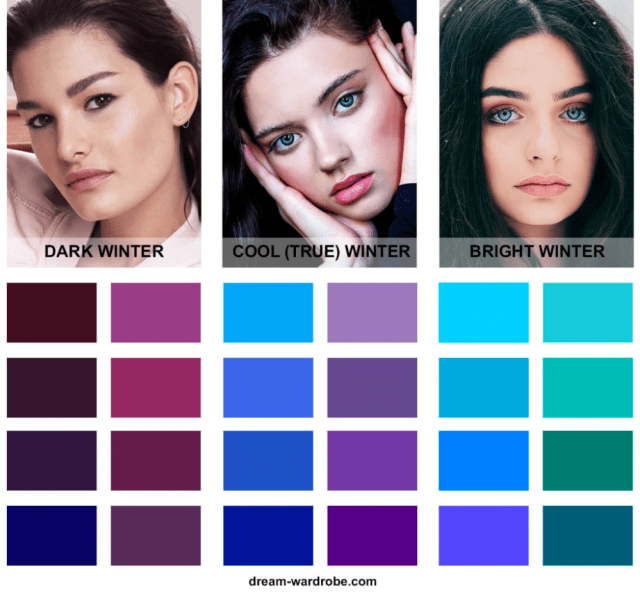
- Winters
- Deep Winter (dark, cool, and soft for a Winter)
- Cool Winter (cool, bright, and dark)
- Bright Winter (bright, cool, and light for a Winter)
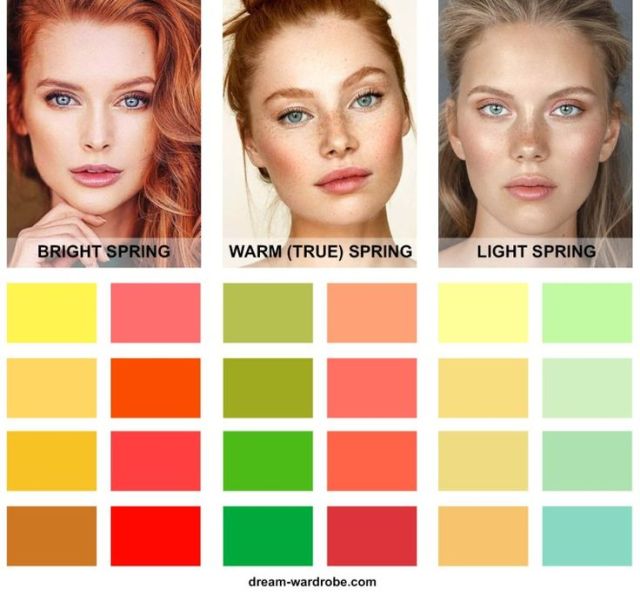
- Springs
- Bright Spring (bright, warm, and dark for a Spring)
- Warm Spring (warm, bright, and light)
- Light Spring (light, warm, and soft for a Spring)
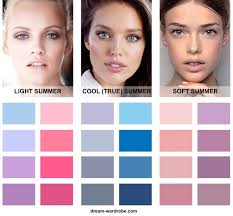
- Summers
- Light Summer (light, cool, and bright for a Summer)
- Cool Summer (cool, soft, and light)
- Soft Summer (soft, cool, and dark for a Summer)
- Autumns
- Soft Autumn (soft, warm, and light for an Autumn)
- Warm Autumn (warm, soft, and dark)
- Deep Autumn (dark, warm, and bright for an Autumn)
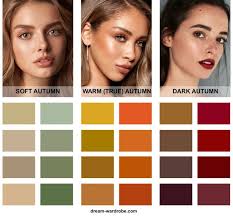
Please note that these palettes are extremely limited, and I am aware that they center around white women. They are the only pictures that I could find comparing all three sub-seasons of each season including palettes. The focus on white people is a very real issue in color analysis spaces that I will get to shortly.
Busting Some Myths:
- All people with dark hair are a deep season.
The most common myth that I see among both followers and skeptics is that all people with dark hair are a deep season, especially Deep Winters. This is simply not true. I especially see this about people with black hair all being Winters. If this were the case, then a large percentage of people of color would all be put into the Winter category. This is not only perpetuated by people who are unfamiliar with the system, but by people who promote it as well. That is why the myth is so prevalent, and if this were the case, that would certainly be a problem, but this is not the case, contrary to information that many people have received. Many people’s features match their color season, but this is not true 100% of the time, as will be evidenced in the charts I am linking to later in this section.
First of all, black hair is inherently cool. However, very few people actually have black hair. The majority of people with black hair actually have dark brown hair, meaning that plenty of people widely considered to have black hair actually have warm-toned hair. Plenty of brunettes are cool-toned, but not all of them. Yes, people with true black hair have cool hair, are often (but not always) Winters, and usually generally cool-toned, but this is not common at all because most black hair is a shade of dark brown. Dark brunettes can and often are Winters, but not all of them are.
I’d also like to link this article about color analysis for people of color in more detail. I don’t love the term vampire-like to describe a person, even if it’s describing a singular picture, and I don’t think that the picture of Sui He in black and white is in lighting that allows one to type accurately, but this article goes into depth more than I have the opportunity to here. I also disagree with her season—I think that she’s a Light Spring. I agree with the Zoe Saldaña analysis. I also love these charts including Black women in all seasons. I will provide more examples next week.
- Color analysis is mostly about your hair.
I see this one a lot. I don’t know how to “bust this myth” other than just telling you that it’s not true. It’s primarily about what looks good with your skin—and once again, dark vs. light skin is not the same as dark vs. light features in color analysis. I’m relatively pale with dark blonde/light brown hair and I feel pretty confident that I’m a Warm Autumn, or perhaps a Soft Autumn. I feel good about Warm Autumn because, in the summer, my hair gets brighter as it gets lighter and closer to Warm Spring rather than getting softer as it gets lighter, though this does not change my season—your season never changes, it’s about your skin. Your undertones will always remain the same. This is also true if you tan.
- You can’t wear colors from outside your season.
Style content creator Ellie-Jean Royden uses a phrase that I love about style systems like color analysis: they’re tools, not rules. Nobody is forcing you to do anything, and a lot of people look great in colors outside of their season. The reason that I’m unsure about Warm vs. Soft Autumn is that I can pull off Soft Autumn pinks very well, but also Warm Autumn yellows. Neither of these colors is in the other season’s palette at all. I definitely think that I’m on the edge between the two of them. That is very much possible.
You can also borrow from your “sister season” palette—Warm Springs and Warm Autumns, Light Springs and Light Summers, Cool Summers and Cool Winters, Soft Summers and Soft Autumns, Deep Autumns and Deep Winters, and Bright Winters and Bright Springs. A lot of my yellow clothes border on Warm Spring yellows, but they still work. Maybe they would be more harmonious if they were a little darker, but that’s fine.
But even if you’re easily rested in one season and very confident about it, even if borrowing doesn’t quite work for you, nobody is forcing you to wear only the colors in your palette. I’m wearing a Light Spring yellow blazer right now and it’s one of my favorite pieces. I also love my jewel-toned green and black blouse, my silver rings, and my bright, Barbie pink blazer. I generally avoid buying new items outside of my palette, but I’m not getting rid of these items and will still happily wear them because I love them, though I often try to pair them with pieces in my palette to balance them out. You may also still look great in a color outside your palette—Chappell Roan is a Light Spring, but she looks great with her hair which is completely outside of her season. The only commonality is that it’s warm, but she looks awesome.
- You can’t find out your color season without paying money.
While color draping with a professional is the best way to find out your season, that’s expensive and most find that to be inaccessible—there’s a reason I’ve never gotten my colors done by a professional. But there are apps that allow virtual draping for free. As long as you take a picture with no makeup in natural light and attempt to hide any dyed hair, you can take that picture of yourself and see it interact with multiple palettes. I thought that I was a Spring until I did this, but that was mostly because I love the various Spring palettes and I knew that I was warm. Virtual draping helps you be more objective because it’s not all in your head.
I’ll write about all of this more in-depth next week, but I just want to make it clear that you can find your season without paying $100 or more. There are also people who do virtual draping for cheap on places like Fiverr, but you can virtually drape yourself without spending a dime. It depends on what you think would work best for you.
In Conclusion:
I hope that this helped as an introduction to Twelve Season Color Analysis. I could go on and on, but I’ll stop here so that it doesn’t get overwhelming. More information and real-life examples will be provided to you next week when I write about how to find your color season and get to know your palette.