


The future can be unpredictable, and college students are feeling its effects. With students worried about their prospects of finding a job, having double majors has become increasingly common to stand out in the labor market.
At FSU, there are several pathways students can take as alternatives to the traditional four-year degree. Students can complete their degree early, take graduate-level courses during their undergraduate experience, complete two bachelor’s degrees, or double major. More specifically, double majoring at FSU involves completing the standard 120 credit hours while studying two majors and receiving one bachelor’s degree.
While some students double major in closely related fields, pairing computer science with math, or marketing with communications, some choose fields that seem completely unrelated.
Meet FSU’s Double Majors
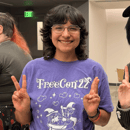
Sasha Veltri: Biology & French
Sasha Veltri is a third-year senior double majoring in biology and French. After taking French classes in high school, she wanted to keep learning the language throughout college. Her journey, however, changed as she initially majored in biology and minored in French.
Once Sasha declared her major, she realized that if she “took just one extra semester, [she’d] be able to major in French.” On top of her double major, she now also has minors in chemistry and anthropology.
Sofia Andrade: Biology & Art History
Sofia Andrade, a pre-med senior double majoring in biology and art history, also initially had art history as only a minor. After learning she was on track to graduate in three years instead of four, she soon declared a double major to extend her graduation track.
Jordyn Dees: English & Information Technology
Jordyn Dees, who graduated from FSU in 2024, knew she enjoyed her English major but wanted a writing career that offered stability. She decided to double major in information technology after learning about technical writing, a profession in which you write documents to communicate technical information.
All of these FSU students share one common thread that makes their double majors unique: they combine their love for humanities and STEM. This pairing may seem unlikely; however, these students demonstrate how the two fields can complement each other and allow them to explore their wide range of interests.
Balancing Two Majors
Double majoring is no easy feat, especially when the majors have zero overlapping courses. “I feel like I’m always working,” said Veltri, who is involved in three different labs and is the Instagram manager for FSU’s Her Campus chapter in addition to her studies.
With zero overlap, a double major’s schedule can easily become very hectic. “It’s really hard,” describes Andrade. Her typical day involves Byzantine art class, having to “run over to biology,” and then ending the afternoon with experimental biology. For Dees, she had to be very careful planning out her courses during her junior and senior year so she’d never take too much English or IT in one semester.
None of these students, however, felt the pros outweighed the cons. “Two majors are so much work, but it’s so worth it,” said Andrade.
More Similarities Than Meet the Eye
All three women found overlaps between their fields. They discovered that these overlaps help them in their future career prospects. Dees now works as a technical writer for Oracle. She explained that most information technology students don’t enjoy public speaking or writing, so her English major gave her an advantage.
“Studying English made me a stronger IT student and studying IT made me a stronger English student.” While English strengthened her writing and communication skills, information technology gave her the background knowledge for her role.
Veltri plans to pursue a PhD in cellular and molecular biology and research health disparities in Sub-Saharan Africa. With more than half of French speakers living in Africa, she finds it especially important to know the language and believes in the importance of scientists who are conscious of the humans behind their science.
Andrade is an aspiring infectious disease physician and is certain studying art history will make her a better doctor. She’s noticed discussions of social stigmatization of diseases in almost all her art history classes. “I want to be the most empathetic doctor I can be, and I can’t do that without knowing the stigma of diseases,” Andrade says.
The Benefits of Both Worlds
Dees, Veltri, and Andrade show it’s possible and even beneficial to study two disciplines. While STEM emphasizes “hard skills” and understanding technical topics, the humanities emphasize “soft skills” and understanding people.
People, however, don’t often study both, which makes a technical person who can effectively communicate much rarer than a pure scientist or philosopher. In a world that constantly pits STEM and humanities against each other, it’s a breath of fresh air to see people say “yes” to all parts of the academic spectrum.
Want to see more HCFSU? Be sure to follow us on Instagram, Twitter, YouTube, and Pinterest!