


Have you ever wondered why so many people have become so interested in tarot in the 21st century? In a time marked by uncertainty, emotional vulnerability, and a collective search for meaning, tarot has reemerged not as a passing trend but as a tool for reconnection. What was once seen as occult or superstition is now explored by everyday people seeking answers, guidance, or simply a moment of introspection.
But tarot didn’t begin as a mystical practice. Its origin dates back to 15th-century Italy, where it was used as a card game called tarocchi, played by nobles and devoid of spiritual significance. It was only in the 18th century that scholars like Antoine Court de Gébelin began attributing esoteric meanings to the cards, linking them to ancient Egypt and Kabbalah. This reinterpretation, though imaginative, shaped the symbolic framework that defines tarot today.
Between symbolism and spirituality
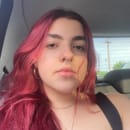
Today, many view tarot as a tool for self-awareness, capable of reflecting emotions, patterns, and possibilities. But for the professional tarologist Dayane, this view is incomplete and even misleading. She shared: “The biggest myth about tarot is that anyone can use it successfully without spiritual connection. I don’t believe it’s just randomness. Tarot is a communication tool with the astral.”
According to her, the cards themselves hold no inherent power. They are merely printed paper until activated by spiritual energy. This perspective directly challenges the popular notion that memorizing meanings or following intuition is enough for an effective reading.
“Even those who don’t believe in spirituality may be connected unknowingly if they possess mediumship. Spirituality manifests regardless of belief”, she added. This deep spiritual approach transforms tarot into more than a symbolic oracle. It becomes a bridge between realms.
The rise of tarot and its risks
With the growth of social media, tarot has gained visibility through short videos, aesthetic posts, and collective readings. But this exposure has also led to distortions. Dayane warned: “Many people are vulnerable and seek comfort. Online tarot readers often deliver optimistic messages – sometimes illusory – to engage audiences. This creates a negative popularity.”
She also criticized those who enter the practice solely for financial gain, without a spiritual purpose. The result, she warned, is content that fosters emotional dependence through hopeful messages—often disconnected from deeper truths. This superficial approach treats tarot as mere entertainment, stripping it of its symbolic richness and spiritual integrity.
The beginner’s path
As the practice gains popularity, many feel called to explore it more deeply. But where to begin? For those who want to start studying tarot, the tarologist’s advice is clear: don’t begin with money in mind. She explained: “Those who start with the intention of offering paid readings right away tend to face great difficulties.”
She also warned against relying too heavily on external techniques. Each person has a unique way of connecting with tarot, and seeking answers outside may hinder that process. “Tarot is a means of communication with spirituality. Each card may have a meaning that only the reader understands. Another person’s technique may not work for you.”
She recommends developing a personal routine, with rituals to open and close readings. After all, opening a tarot session also opens a spiritual portal, and it must be respectfully closed.
Choosing the right deck
Choosing a first deck often raises questions. Many recommend the classic Rider-Waite-Smith for its accessible symbolism. But the tarologist believes this choice should be spiritually guided. She shared: “The right deck is the one your spirituality indicates. In my case, my spiritual guide showed me exactly which one to use before I even imagined following this path.”
This choice may come through dreams, intuition, or even spiritual consultation. What matters is that the deck resonates with the reader.
Reading, context, and depth
Each tarot card carries multiple meanings. What defines the interpretation is the context of the question and the reader’s connection with the deck. “Each medium will have a unique communication with its deck. The same card can say different things about love, career, or health depending on the energy involved.”
This symbolic flexibility makes tarot rich and difficult to automate. That’s why she firmly states that readings done by apps or artificial intelligence don’t work. “If some answers seem accurate, it’s just data correlation. There’s no spirituality there.”
Tarot as a mirror, not a sentence
One of the biggest fears among tarot seekers is receiving a “bad prediction”. But the tarologist explains that tarot doesn’t offer fixed destinies; it reflects the present. “The future can change. A reading shows what’s being formed today. If the person makes different decisions, the future will be different.”
Even difficult predictions come with advice. When properly conducted, tarot should never generate fear or anxiety, but rather relief, clarity, and liberation.
What tarot teaches
At the end of our interview, I asked what tarot had taught her about life. Her response was one of the most moving: “I learned to have more compassion. People make mistakes because they’re in pain. We’re all living for the first time, without a manual. But I also learned to protect myself. It’s possible to forgive and move forward without keeping everyone in our journey.” This phrase summarizes what tarot can offer: not ready-made answers, but possible paths. Not certainties, but awareness. Not predictions, but presence.
More than cards
Tarot is, above all, a bridge. Between the visible and the invisible. Between who we are and who we can become. Between what we feel and what we haven’t yet named. Whether you’re a curious beginner, a skeptic seeking meaning, or someone already walking a spiritual path, tarot can be a powerful tool if used with respect, intention, and connection.
—————————————————————
The article above was edited by Clarissa Palácio.
Did you like this type of content? Check Her Campus Cásper Líbero’s home page for more!