


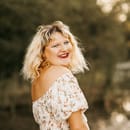
Hellooooo, Her Campus readers! It’s so nice to meet you! My name is Liz, and I’m a freshman who just joined Her Campus! It feels a bit awkward for me to jump right into the deep end with no introduction, so I thought my first article could be a fun mix of things:
First and foremost, I am a creative writing major with a lot of opinions on literature. I love to talk about everything that I find interesting and to share those thoughts with people around me!
Secondly, I love reading; I believe that it can deeply and truly improve the quality of our lives, and I wish that more people were more passionate about it than they are. Please take this as a recommendation list and an invitation to welcome a wonderful book into your life!
And finally, if I love something, if I hate something, if I do not understand something, I aim to understand it. This includes myself. An incredibly analytical person, I feel the need to dissect the reasons behind my interests and break them down to their core. While this article couldn’t be published in an academic journal, it does provide a loose psychoanalysis into my brain via the breakdown of each of these novels.
Hopefully, this provides some insight into who I am, what I aim to do, and what I will be writing about in the future! Let’s enjoy the journey!
On Earth We’re Briefly Gorgeous by Ocean Vuong
If you end up in a class with me, and one of the icebreakers is “What is your favorite book?” this novel will be my answer. I first read On Earth We’re Briefly Gorgeous in 2021 when it subsequently changed my life. This a letter from a boy to his mother, an immigrant from the Vietnam War, who cannot read. The speaker, Little Dog, is a queer man living in New York, and though he is now in his late twenties when writing, the novel spans much of his childhood growing up in Hartford, Connecticut, and the reader feels as if they are growing up alongside him, experiencing years of life within a few pages; Other times a single instance of Little Dog’s life is stretched out into several beautiful paragraphs. The reader has the perspective of God, or of a man looking back at his childhood with the regretful wisdom of hindsight.
Ocean Vuong is first and foremost a poet, which is clear from the first page filled with his beautiful and delicate prose, though he does not pull any of his punches writing about the violence of American imperialism, and PTSD-driven abuse. Every page is a joy to read, each word carefully chosen to tell the most accurate and profound story possible. The novel explores themes of family, queerness (specifically growing up queer in a homophobic town), war, and generational trauma. All topics that I’m deeply interested in, and explore in my own work, to some degree or another. Vuong’s writing, though difficult to read, is also deeply cathartic, and as someone who has always gravitated toward darker stories, it scratches the itch of needing to feel something visceral.
Sometimes being offered tenderness feels like the very proof that you’ve been ruined
-Ocean Vuong, On Earth We’re Briefly Gorgeous
I am not an immigrant, nor did I grow up in an area where we had a large immigrant community—Vuong’s experiences as an Asian American, which he transforms into Little Dog’s experiences, are something that is foreign to me. I’m a firm believer that reading diversely is one of the best ways to deepen your empathy for others and form a basis for understanding different experiences. This novel does it brilliantly, and I recommend it to everyone seeking to learn more about any of the topics I named above.
The starless Sea by ERin Morgenstern
“But the world is strange and endings are not truly endings no matter how the stars might wish it so.”
-Erin Morgenstern, The Starless Sea
Despite her extremely limited body of work (two novels, to be exact), Erin Morgenstern is one of my favorite authors of all time. She, similarly to Ocean Vuong, has beautiful prose that immediately captured me at the first page. Both of her novels weave interlocking stories together seamlessly, and despite the large cast of characters present in The Starless Sea, they each have distinct and magical personalities. They all add something to the complex narrative that transcends space and time; I find new and exciting details during every re-read. I firmly believe that you should go in blind, but for those who are cautious readers, that can be nerve-wracking, so I will leave you with this: This book answers questions like: “Is magic real? Is love? Are they one and the same?” and “Do we have to wait for the fantastical to find us, or should we seek it out? Are we brave enough? Is it worth it to leave the rest of our lives behind?”
I recommend The Starless Sea for writers and readers who truly love storytelling; above all, it is a love story to the stories that persist throughout time, and the ones who tell them. This book caters to the wondrous side of me, who waited too long for my Hogwarts letter to arrive and decided to storm into the school myself.
All FOr the game by nora sakavic (series)
Here is where I embarrass myself a little bit by recommending a self-published, unfinished series by an author who uses a pen name. All For The Game (AFTG) has held a special place in my heart since I read it in 2020 at the recommendation of my first and oldest internet friend (sorry Mom, I broke the don’t talk to strangers online rule). While there are many valid criticisms of this book, and it is not the most beautiful spectacular wonderful piece of literature to exist, it still freaking slaps. If I tell you the plot of the book, you will think I’m insane, so here is a three-word blurb that loves to circulate around the AFTG Tumblr community: gay sports mafia. Just trust me, bro.
While the plot is insane and unrealistic, and illegal and problematic, Nora Sakavic knows how to write. Her prose is punchy and filled with amazing one-liners, sometimes half-a-page liners since our beloved main character, Neil Josten, just doesn’t know when to shut up. The series is chock-full of complex characters that are truly awful people, but (mostly) trying to get better, so you just can’t help but root for them.
“Hope was a dangerous, disquieting thing, but he thought perhaps he liked it.”
-Nora Sakavic, All For The Game
This book series isn’t for everyone, I showed it to my best friend after four years of passionate friendship and they… did not like it. And I understand that! But if you’re like me, and you love found family tropes, screaming into your pillow (good and bad), and adrenaline-filled scenes that will make you actually care about a fictional sport, you might like this. If you like reading fanfiction, this is basically fanfiction but better because you can hold it in your hands. It also has a very dedicated online fandom and fanfic of its own to read if you fall in love with it like I did. Let it be known that I am not just into pretentious literature! I like really shitty stuff too.
Note: I think trigger warning lists should be a norm for all books that handle sensitive topics for the safety and knowledge of the reader, but if you are thinking about reading this series, you especially need to look up some of the trigger warnings before beginning. Take care of yourself <3
The hunger games by Suzanne Collins (series)
I know, I know. I’m cheating again. The title of this article said “My favorite books” NOT “my favorite series,” but it’s my article and my rules. And if I had to pick a favorite out of the series itself, it would probably be the first book, which shares the same title, so ha, NOT cheating. And this is the last one, I promise.
The Hunger Games is a middle school classic, but it is also something that I believe we should carry with us long into our adulthood. Collins critiques the modern age of American imperialism with her skillfully crafted world and nuanced characters that require that her readers analyze the texts over and over and over again. This is something that I love, and have recently found out that my friends have made a pact behind my back to not mention the series around me because I will go on several minute-long rants about my numerous thoughts and theories. What can I say, I’m a yapper. Expect articles focused on this series in the future.
As an activist, The Hunger Games is a series that I will always recommend alongside academic and nonfiction books. Not only does fiction give us the ability to peek inside of people different from us, but it also can be an accessible way for the everyday person to be introduced to complex topics. In this case, the series critiques capitalism and American imperialism in an easily digestible way that any browsing reader can understand. Never underestimate the power of fiction.
“Destroying things is much easier than making them”
-Suzanne Collins, The Hunger Games