


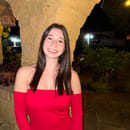
Since I was born, I have been involved in the special needs community. My mother owned a company called Dicapta — in which she created accessible technology used for things like dubbing and captioning — and I would frequently come with her to test her new developments with children with special needs. As a young kid, I saw no difference between those kids and I. We were simply kids. It wasn’t until I grew up that I understood those kids weren’t often treated the same as little Juanita treated them. Instead of being seen for their individuality, they were reduced to labels — words used to exclude them rather than embrace them. In high school, I saw how these labels fueled bullying and isolation. It shocked me how quickly society dismissed those with special needs, when what they truly deserved was acceptance, respect, and a seat at the table. But now as a college student, I’m working to be part of a change for good, giving me the glimpse of hope that little Juanita had always wanted.
This January, I started working at Chance 2 Dance, Florida’s first inclusive and sensory-friendly dance studio. I still can remember my first day: I was excited, but also nervous and unsure of what to expect. I had always been around individuals with sensory sensitivities, but I had never taught them.
In the beginning, I struggled with understanding how to assist each dancer individually. At first, I thought I was failing. But then I realized the core truth of inclusive spaces: Every individual has different needs. Some dancers needed verbal cues, some needed visual aids, others just needed time. The joy of teaching came in discovering how to meet each student where they were, and watching them soar.
I will never forget the day of our spring dance recital. One student I have has Down syndrome and usually needs assistance with raising her arms and following the movement. When that student hit the stage, I could not believe my eyes. She did a section of the dance fully by herself with the biggest smile. My coworker and I ran off the stage in tears, hugging our student. That is what makes the job worth it. That is the beauty of inclusion. However, inclusion is not always a reality in our country.
The Trump administration’s political actions this year have affected the special needs community in dramatic ways — such as the admin’s efforts to strip down the Department of Education, which specifically funds many programs that support the special needs community. (One of these programs included my mother’s company; because the department is slowly shutting down, her funds were cut, which resulted in her shutting down the business.) Further, the effective closure of the department calls into question the enforcement of the Individuals with Disabilities Education Act (IDEA), a federal law that guarantees students with disabilities the right to a Free Appropriate Public Education. Without the department, states may not be held accountable for meeting these requirements, and some students could lose access to necessary services like speech therapy and special education teachers.
The administration may also move special education from the Department of Education to the Department of Health and Human Services, which raises serious concerns, as HHS does not specialize in education. Many advocates fear this change will weaken accessibility services for students in school and create confusion for families navigating the special education system.
Another decision that has affected the special needs community was the cut of DEI. Because of DEI cuts, funding for programs such as Chance 2 Dance have dramatically decreased. C2D lost $20,000 in DEI funding and $50,000 in art funding for the program this past year — that is over $70,000 lost this fiscal year. But even with the cuts, C2D will thrive because of the strong community and how much people care about this growing dance family. And that speaks to the message I want to share: Don’t give up on inclusion. I know I won’t.
When we invest in inclusive programs, when we choose respectful language, when we see people not as categories but as individuals, we build a stronger, more compassionate world. We advocate for policies that protect inclusive education. We support programs that empower every child, regardless of ability. We correct language when it harms, and we open doors instead of closing them. Inclusion can’t be optional — not in our schools, not in our communities, not in our values.
This is not just about funding or politics. It’s about whether we choose to see people for their possibilities or define them by their differences. Inclusion isn’t charity. It isn’t a favor. It’s a fundamental right. And when we deny people the tools, spaces, and respect they deserve, we’re not just failing them — we’re failing ourselves as a society. The world little Juanita imagined wasn’t a perfect one, but it was one where every child got a chance to dance, to be heard, to be seen for who they are — not just by their diagnosis or perceived limitations, but by their spirit, their joy, and their potential. The world doesn’t change because one law passes or one school gets funding. It changes because enough of us decide that everyone belongs — and then fight to make that real.