


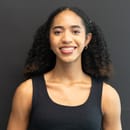
As a Black American, I find that my hair is one of the most identifiable parts of me. Whether it is in my vacation braids or my daily wash-n-go, one of my proudest traits is one of the things that openly signifies me to the world.
Growing up, I couldn’t sit still in a chair. The occasional time my mother was able to do a silk press on my tender-head was done by bribery with maaaaaany Oreos (my mom is now one of the only people, other than myself, that is allowed to touch my hair).
What I didn’t realize was one of my greatest troubles growing up would become one of my greatest strengths growing older. I never had a period of time when I felt self-conscious about the hair I naturally have.
My own disdain for sitting still saved me years of heat damage. I soon realized that my own defiance to changing my hair texture was often ridiculed within the mainstream media not long after.
As kids, my older sister and I would marvel at the TV, watching whatever my sister put on the screen. Granted, I could’ve given input on what to watch, but my older sister was the only one that knew how to use the TV remote.
We often saw awful examples of Black hair being ridiculed in children’s shows. When a character was having a bad hair day, somehow that meant their hair had to be shaped in a kinky afro that was absolutely unmanageable and embarrassing to be seen with.
In my opinion, these kinds of scenes sometimes go over children’s heads, but ultimately alter their way of thinking subconsciously.
As a result, when a young Black child sees their natural hair, they may begin to associate it with the shame and horror their favorite character expressed toward hair that looked like their own.
Further into adulthood, I feel like the idea that curly hair is “childish” or insinuates that someone is “broke” because their hair texture isn’t manipulated, is actively related to the media along with other unfortunate stereotypes fed to Black people.
The urge to straighten your hair or “have your hair done” for formal events is also a consequence of this kind of negative conditioning. I will never disprove the fact that for some Black women, wearing their natural hair is either not an option for them or is something that is vulnerable for them.
That side of the argument is a little bit more nuanced and detailed, strictly because it has to do with the vulnerability toll it can take on Black women and the uncomfortable comments that they might receive when trying to be authentic.
When a Black woman attempts to wear their natural hair after manipulating their curls into a different style regularly, I commend her. It takes a lot of courage, self-awareness, and bravery to do such a thing.
In the 1960’s, the mainstream media heavily marginalized and pathologized the natural features of Black Americans in favor of Eurocentric beauty standards. This scrutiny catapulted the Natural Afro Movement, which originated during the Civil Rights movement in the United States.
Despite the efforts made to repeal Jim Crow laws, television continued to portray Black characters through racist, “minstrel-like” stereotypes. In my opinion, the Natural Hair Movement wasn’t to invalidate Black Americans who chemically manipulated their curls or wore their hair strictly on locs and/or braids.
Rather, it was meant to show defiance against the notion that naturally coily, curly, and voluminous hair should be hidden or altered. The movement is meant to reject the Eurocentric beauty standards pushed on Black Americans and to heighten the racial esteem of the Black community.
During slavery, Black hair was devalued and, on most plantations, slaves were shaved bald in a deliberate effort to strip them of their identity. Such dated, derogatory behavior and its implications should have no authority over how Black people express themselves now.
Civil Rights activist Angela Davis was one of the central icons who spearheaded the “Black is Beautiful”/”Natural Afro” movements. She would show up to her rallies and protests with a picked-out Afro to reject the idea that Black hair was “unprofessional” and should constantly be concealed behind chemical straighteners and relaxers.
Her signature look quickly became a symbol of Black pride, alongside her Black Panther counterparts, Kathleen Weaver and Elaine Brown, who wore their hair similarly for the same abolitionist reasons.
In a time when people are noticing microaggressions a little easier and analyzing the media they consume a little closer, I find that many topics that were once taboo are becoming easier to bring up in regular conversation.
As people become more willing to learn about different cultures, I feel like that same curiosity is often not extended to understanding natural Black hair.
The media we feed ourselves actively influences the thoughts we say to our friends, family, and acquaintances. I do not find that we have enough grace and understanding for Black hair, especially on social media.
Quite frankly, there has been a development of people being way too comfortable saying when a Black person needs to get their hair done or a retwist, as if it is not the natural way their hair grows out of their head.
I’m not saying entirely ignore hair maintenance—that is not the point. But something that used to be a gentle reminder is now turning into a degrading joke.
The comment section of a girl with 3-month-old braids or a guy with slightly overgrown locs, in my opinion, doesn’t warrant the intense amount of backlash that a non-minority wouldn’t get if they posted a video with their hair unbrushed.
I feel like there’s a lack of consciousness on what is fine to comment on. To me, the bizarre ostracization of Black hair on social media reinforces harmful stereotypes of Black identity.
From my perspective, Black hair doesn’t have to look palatable in the eyes of people who don’t have it for it to deserve respect.