


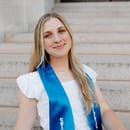
Three years ago, I didn’t even know that a Master of Fine Arts in Creative Writing existed. I also didn’t know that they are notoriously difficult to get into or that I wouldn’t get into a single program my first time around. Now, as one of the single-digit percentile of applicants lucky enough to be accepted into my top program at The New School (and a few others!), I want to shed some light on my application process and share more about the MFA to give another aspiring writer a better shot at the coveted acceptance letter.
The main criteria I was looking for in a program was location, cost, curriculum, strength of faculty and learning environment, so I plugged those into a detailed spreadsheet organized by application due date. I am a competitive person by nature, but I believe that I write best in a collaborative creative environment, and I also knew that I wanted to be back in a city or in a large college town. I received my undergraduate degree in English, where I focused heavily on analytical-style writing and knew I wanted to expand my writing practice outside of traditional academia and theoretical work. Thus, I looked for programs that gave students room to take electives, especially in children and young adult literature, screenwriting and the creative arts.
This narrowed my list down to 16 schools, further divided into three categories—safety, target, and reach—based on how likely I was to get in. From there, I scoured each school’s website for the specifics on each section of the application and what the program looked for in a writer. I dissected degree requirements and outcomes, letter of recommendation requirements, cohort size, creative sample format, community outreach and involvement, teaching requirements, program mission statements, professor teaching philosophies, notable alumni, classroom styles, and class times. You name it, I read it.
The biggest growth I saw in my application process I attribute to program information sessions and more time with my creative sample. Programs want to know that you want them as much as they want you, and information sessions are the perfect way to show you care and put your name in their minds again. The New School by far had the best outreach, and I met so many professors, as well as learned about their writing philosophies and admissions staff by attending information and write-in sessions.
Then, it was time for the most important aspect of the application process—the writing sample. My first application was due on December 1, but I started thinking about my writing sample in September. I knew choosing the right pages would be something cultivated over months, and the last thing I wanted was to spend months on applications only to submit sloppy copies.
As a Type A person, the nebulous nature of the creative sample was really tough for me. Most applications came down to 15-40 pages for fiction with little guidelines. The creative freedom was both liberating and overwhelming. The best advice the internet could provide was to submit the work that I was most passionate about or that showed who I was as a writer. However, as a young writer, that is still evolving for me, so I chose something at the intersection of passion and polished, a combination of an excerpt from my novel-in-progress and a short story I revised from my senior year capstone project. As with most things as a career-writer-in-progress, I realized it was never going to be certain, so I just committed to something early and rolled with it.
Once I selected my sample, I sent it to trusted friends from college and edited it extensively on my own. I read articles and watched YouTube videos, though I think focusing on my own personal style and sample was the most helpful. After all, I wanted to be accepted to a program that valued my work for me, not what I thought they wanted to see.
Honestly, none of this could have happened without my gap year. I had to learn to slow down first, and out of college, I simply did not have the writing sample to make a quality applicant. Even within the first few months of finding work-life balance, I learned so much about what I gravitated toward as an artist and about myself, which was even more important. I had space to realize I wanted to write children’s and young adult fiction in addition to adult fiction. I actually wrote an authentic statement of purpose because I could be clear on what I wanted. I had new life experiences from moving back home and traveling the world, and I actually got to work with teenagers as a cross-country coach and substitute teacher, which did wonders for my sense of voice in young adult literature. Ultimately, I embraced confusion, loneliness, silence, change and independence in a new way. I figured out who I was outside of what I did, and what I did grew to meet who I was becoming.
I am so grateful that I now get to collaborate in a supportive writing community in my favorite city in the world. The New School was worth the wait, and I guarantee 18-year-old me never thought art school was in the cards. Though it was tough, the MFA application process was a microcosm of self-discovery, so even if you are not a writer or MFA candidate, I hope you take this as a reminder that you are worth the time and energy to find the right place for you.