


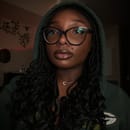
On June 12, 2026, Olivia Rodrigo released her album “you seem pretty sad for a girl in love,” and her song “expectations” quickly became a trending song on TikTok. Across TikTok, creators began using the track to highlight societal double standards and harmful behaviors that the internet continues to overlook or normalize. Joining this trend, a creator posted a three-part series targeting an online dynamic: Masculinizing Black women doesn’t make you cool.
The internet and society have a habit of critiquing Black women down to the smallest detail. Whether it’s how she conducts herself in public or who she’s in a relationship with, the internet will be the first place where she’ll face scrutiny. What also comes with that scrutiny is the masculinization of that Black woman to break down her confidence and strip away her femininity. Serena Williams, Michelle Obama, Megan Thee Stallion, Angel Reese, Olandria Carthen, Grace Jones, Francine Niyonsaba and many other Black women have fallen victim to this harmful stereotype.
A Legacy Rooted in History
The masculinization of Black women is a social bias that paints them as aggressive, exceptionally strong and masculine instead of allowing them to be vulnerable and human. These concepts reinforce the many stereotypes placed upon Black women and denies them the ability to be seen as soft in comparison with white women. The Noire Space addressed this issue stating, “The masculinisation and defeminisation of black women/girls contributes to the societal acceptance of violence against us…The idea that black women possess these inherently masculine traits contributes to the idea that we are able to bear inhuman levels of pain.”
During slavery in America, Black women endured harsh physical labor, sexual violence, forced seperation from family and murder. During that time, Black women were expected to endure those hardships, survive and move on from it. In 2026, society still places similar expectations on Black women when facing difficulties or challenges. Society expects Black women to handle difficult situations with grace and poise, but if she doesn’t, she’s quickly labeled as “ghetto” or “aggressive.” This bias has been passed down through generations, reinforcing the idea that dark-skinned Black women will never be an equal in the eyes of society.
Misogynoir in Modern Reality TV
One recent example of the internet masculinizing a Black woman is Tierra “Titi” Davis from season 8 of Love Island USA. Davis made her appearance midway through the season during Casa Amor. After Davis coupled up with KC Chandler, the couple entered the main villa and immediately faced tension from other cast members. Davis interjected, and the focus of the argument shifted from Chandler to her. Davis primarily argued with Trinity Tatum, referring to her as a little girl. As the discussion escalated Davis responded, “you can pipe down, I’m Titi.”
Davis received heavy criticism from the Love Island fan base for speaking on Chandlers’ behalf during the recoupling and arguing with Tatum, Aniya Harvey, Melanie Moreno and Kayda Bosse. Some fans criticized Davis by uploading AI generated photos of her with exaggerated muscles, aggressive, as a bird and feminizing Chandler. These images turn the masculinization of a Black woman into a joke, with some viewers using their disapproval of a Black woman’s behaviors to justify the mockery.
As someone who watched this season unfold, I didn’t like how Davis conducted herself during that moment. Still, that doesn’t give anyone the right to use that stereotype to bring down a Black woman in any capacity. As a society, we should be able to criticize women that we see on social media or TV without masculinizing them or stripping away their femininity. What makes this ironic is that people will say that we need to protect Black women who go on TV. However, that same grace doesn’t apply when that Black woman isn’t a fan favorite..
This habit happens the most within the reality TV realm especially in the franchise Baddies. Baddies continues to be one of the most talked about and controversial shows out right now. Castmember Tavii Babii has been one of the main people who’s been masculinized not only by her fellow cast members but by the fans as well. Tavi is a dark-skinned Black woman from Brooklyn, New York, frequently stereotyped by cast members whose features are deemed more feminine. People criticize Tavi and call her a man based on her mannerisms, fighting style and physical features.
The cast and fans often make comments comparing Tavi to male rappers such as the late DMX. This bias has escalated to the point of people making accusations of Tavi being a transgender woman and using that to make fun of her. These accusations also stem from a combination of historical defeminization, racist stereotyping and gender norms. This also happened to cast member Biggie when she first entered Baddies. The show itself and its fandom has perpetuated the negative stereotypes within the Black community highlighting fighting and increased substance usage. With viewing the show and the fandom, I’ve noticed how the Black community has allowed other races of people to dog pile on Black women to the point of joining in on the dog pile.
Moving Beyond the Punchline
As Malcolm X famously stated on May 22, 1962: “The most disrespected person in America is the Black woman. The most neglected person in America is the Black woman.” Racism, colorism, misogyny and anti-Blackness all intersect in the masculinization of Black women. This harm inflicts deep emotional damage, forcing generations of Black women and girls to navigate relentless scrutiny regarding their features and presentation.
Dark-skinned Black women continue to be targeted for societal entertainment. From tropes about hyper-aggression to harmful memes, society routinely uses Black women as a punchline. Black women are constantly mocked, but using a Black woman as the butt of a joke doesn’t make you cool. Disrespecting Black women doesn’t make you cool. Masculinizing Black women doesn’t make you cool.