


For Black women at West Virginia University, finding a space where they feel seen, supported and understood can make a major difference in their college experience. 100 Black Women at WVU aims to create exactly that kind of space.
Centered around its mission to “Uplift. Empower. & Inspire.,” the student organization focuses on building community among Black women while also creating opportunities for leadership development, service, wellness, academic success, financial education and professional growth. Although the organization is centered around Black women, students across campus who genuinely support its mission are also welcome to attend open events and support its work.
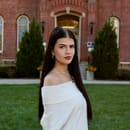
Leading the organization this year is President Léandra Hastings, a junior biochemistry major from Saint Clairsville, Ohio. Hastings first became involved with 100 Black Women during her freshman year as a general body member after coming to WVU determined to find spaces where she could connect with other Black students. Having spent much of her life in predominantly white environments, she viewed college as a chance to intentionally find a community where she could relate to the people around her.
“College felt like an opportunity to intentionally find my community and connect with people who shared similar experiences,” Hastings said.
100 Black Women quickly became one of those spaces for her. What initially drew her to the organization was the opportunity to meet other Black women, build genuine relationships and find a sense of belonging on campus. As she became more involved, however, she also began seeing the potential for the organization to grow.
During her freshman year, Hastings noticed attendance at some events was low, but she still understood how valuable an organization centered around Black women could be at WVU. That motivated her to take on a larger role. She became vice president during her sophomore year before stepping into the presidency as a junior.
Serving as vice president first gave Hastings the opportunity to learn how an executive board operates and better understand both the challenges and responsibilities that come with leadership. By the time she became president, she felt prepared to help move the organization forward. Today, her responsibilities include providing direction for the organization, delegating responsibilities among the executive team, developing new ideas and initiatives and building relationships with campus and community partners.
For Hastings, the organization’s purpose is especially meaningful at a predominantly white institution. She said being part of such a small demographic on campus can sometimes leave Black women feeling isolated, especially when they may go through entire classes without seeing another student who looks like them.
That experience can also come with additional pressures.
“At the same time, there can be pressure to excel, prove yourself, and sometimes feel as though you are representing more than just yourself,” Hastings said. “I think those experiences and pressures deserve more conversation.”
100 Black Women works to provide a space where those conversations can happen while also giving members an opportunity to relax, meet new people and feel comfortable being themselves. Hastings said she hopes new members find a community where they feel accepted and supported but are also encouraged to grow personally, professionally and as leaders.
The organization’s programming reflects that goal. Throughout the year, 100 Black Women hosts events focused on sisterhood and community-building, professional development, academic success, health and wellness, financial education, confidence and cultural awareness.
Programs have included study sessions, interview preparation, fitness classes, wellness events and financial literacy conversations. This year, the organization is also introducing programs such as Black Girl Hygiene 101, wellness programming and a “Girl Dad Talk” focused on developing multiple streams of income, including conversations about real estate and becoming a landlord.
Hastings emphasized that not every event has to focus on academics or career development. College itself can be stressful, so part of the organization’s mission is simply giving Black women opportunities to have fun, build friendships and take a break from some of the pressures they experience.
Community service is another major part of the organization. Members participate in donation drives, community cleanups and other service projects throughout WVU and the greater Morgantown community. Hastings said she wants the organization’s programming to be well-rounded enough that students can benefit whether they are searching for friendships, professional resources, leadership experience, wellness support or opportunities to serve.
One event that particularly stands out to Hastings is “Passing the Torch,” a panel she organized featuring Black women who had experience navigating predominantly white institutions in college and predominantly white environments in their professional careers.
During the event, panelists discussed challenges they had experienced, how they learned to overcome them and lessons they wished they had known earlier. They also offered advice to younger women preparing to navigate similar environments.
After the event, several students approached Hastings and told her how meaningful the conversation had been.
“That moment really touched me because it showed me that the work we were doing was reaching people in a meaningful way,” Hastings said.
For Hastings, that response reinforced why the organization matters. 100 Black Women is not simply about planning events. It is also about creating opportunities for students to learn from other women, find support, build connections and see examples of what is possible for them.
Representation is also an important part of the organization’s approach to empowerment. Hastings said seeing other Black women succeed academically, lead organizations or hold influential positions can help students envision themselves in similar roles.
“Sometimes you have to see someone who looks like you doing something before you can fully picture yourself doing it,” Hastings said. “When Black women see other Black women leading organizations, succeeding academically, or holding important positions on campus, it makes those opportunities feel more obtainable.”
The organization also encourages members to think about empowerment beyond academics or career success. To Hastings, empowerment can mean learning to speak up for yourself, prioritizing mental and physical health, developing healthy relationships, gaining financial knowledge and becoming more confident in who you are.
“Success is important, but we want our members to feel fulfilled as people too,” Hastings said.
Collaboration has also become an important part of how 100 Black Women connects with the larger campus community. The organization works with other student organizations, campus groups and community partners to combine resources and create programming that reaches more students.

This year, for example, the organization is collaborating with Alpha Kappa Alpha Sorority, Incorporated® and The Wax Bar by Tracy for a Pretty Purple Pamper Party focused on self-care, wellness and creating a fun environment for Black women to connect. Hastings hopes collaborations like this will help the organization continue expanding its relationships across campus and throughout the Morgantown community.
Looking ahead, Hastings wants 100 Black Women to become more consistent, visible and recognizable at WVU. She hopes to increase membership and engagement while creating events that members genuinely look forward to attending.
Long term, she wants the organization to become one that Black women automatically know about when they arrive on campus.
“I would love for 100 Black Women to become one of those organizations that Black women at WVU automatically know about when they arrive on campus and see as a place where they can find community,” Hastings said.
She also hopes members leave the organization with something that stays with them beyond graduation, including confidence, relationships, leadership skills and professional connections.
“I also hope they leave with the desire to continue uplifting other Black women wherever they go,” Hastings said. “The community does not have to end once someone graduates from WVU.”
For anyone interested in attending an event but nervous about walking into a new space, Hastings encourages students to simply show up as they are.
“You do not have to know anyone, already have friends in the organization, or be extremely outgoing,” Hastings said. “We want you there, and sometimes all it takes is coming to that first event to realize you have found people you connect with.”
Ultimately, Hastings wants students across WVU to understand that 100 Black Women is about much more than hosting events. The organization is working to create a space where Black women can grow academically, professionally, financially, socially and personally while building meaningful connections along the way.
Everything comes back to the same mission: uplift, empower and inspire.